"Best" depends on what your room will be asked to do. A clinic running twenty full-leg treatments a week needs a different machine from one adding hair removal to an existing facial business. Here is how to choose, specification by specification, with the reasoning shown so you can apply it to any machine, ours or anyone else's.
Start with your client list, not the brochure
Before comparing machines, write down three things:
- How many hair removal treatments per week you expect in year one
- The split between small areas (lip, underarms) and large areas (legs, back)
- The skin types your clinic sees most
Those three answers decide nearly everything below. A machine that is ideal for a high-volume laser centre is overspending for a salon starting out, and a compact machine that suits a salon will slow down a busy room.
Wavelengths: the specification that decides who you can treat
| Wavelength | What it is used for |
|---|---|
| 808nm | The workhorse. Good absorption with sensible depth for most clients |
| 755nm | Higher melanin absorption, preferred for finer and lighter hair |
| 1064nm | Deepest penetration, the wavelength operators reach for on darker skin |
| 940nm | A middle ground between 808 and 1064, added on four-wavelength handpieces |
A handpiece that fires several wavelengths together lets the operator tune one machine per client. For a general clinic, a triple-wavelength machine (755 + 808 + 1064nm) is the sensible default. A fourth wavelength adds flexibility rather than a new category of client.
Power, spot size and repetition rate: the speed of a treatment
These three numbers decide how long a pair of full legs takes:
- Peak power sets how much energy each pulse can carry at a given spot size
- Spot size sets how much skin each pulse covers
- Repetition rate sets how many pulses per second the handpiece fires
A larger spot at a faster rate covers a back or full legs in a fraction of the passes. That is the real argument for a higher-power platform: not stronger results, but shorter appointments and more of them per day. If most of your work is small areas, that advantage shrinks.
Cooling: the specification nobody quotes and every operator feels
A diode laser heats the skin surface, and the cooling system is what keeps clients comfortable and the machine stable through a long day. Look for:
- Contact cooling at the tip (a chilled sapphire window), which removes the need for coupling gel and post-treatment icing
- A cooling system rated for continuous use, not just a first-hour demo
Ask what the machine does in its sixth hour of the day. The answer tells you more than the peak power figure.
Treatment modes
Most professional diodes offer a conventional single-pulse mode and a stacking (SHR) mode that builds heat gradually with many low-energy passes. Stacking is the mode many clinics use for comfort on large areas. Check that both modes are available and that the machine ships with preset parameters for common hair and skin combinations, which shortens training.
Warranty and the five-year cost
Twelve months on the machine is the norm to look for. The handpiece is a wear part, usually with a shorter warranty, and its replacement price is the most useful number you can ask a supplier for. Ask too:
- Is training included, and in what form?
- Who handles a fault, and how fast do replacement parts ship?
- Is the price you are quoted final, or are freight and duty added later?
Our buying checklist covers the full list of questions.
How our two diode platforms compare
We sell two dedicated diode machines. Neither is "better"; they suit different rooms.
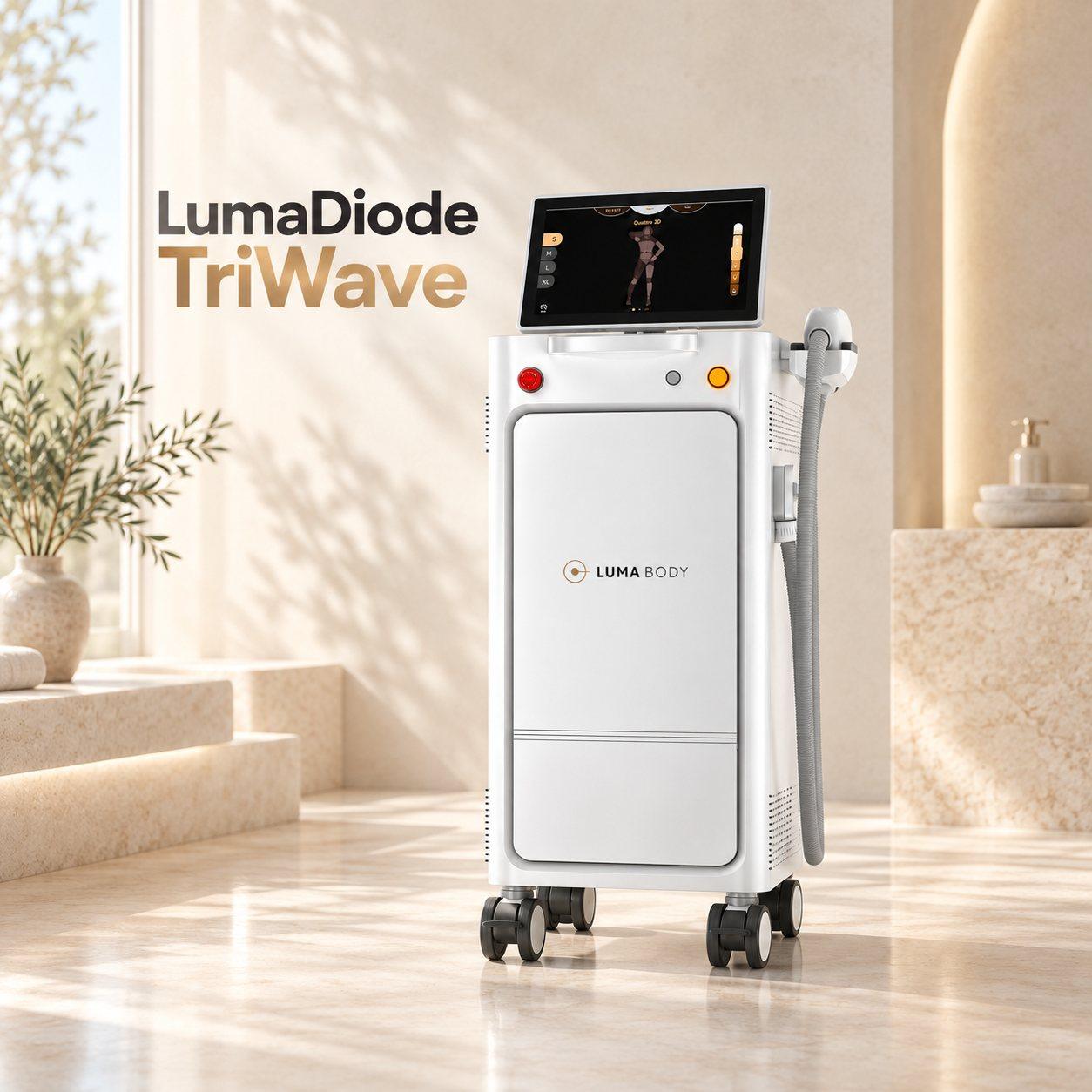
LumaDiode TriWave — $12,900, delivered. 1200W, 755 + 808 + 1064nm in one handpiece, 10x20mm spot up to 10 Hz, HR, SHR and SHR stacking modes, TEC cooling. The fit for a clinic adding hair removal to other services, or starting its first laser room.
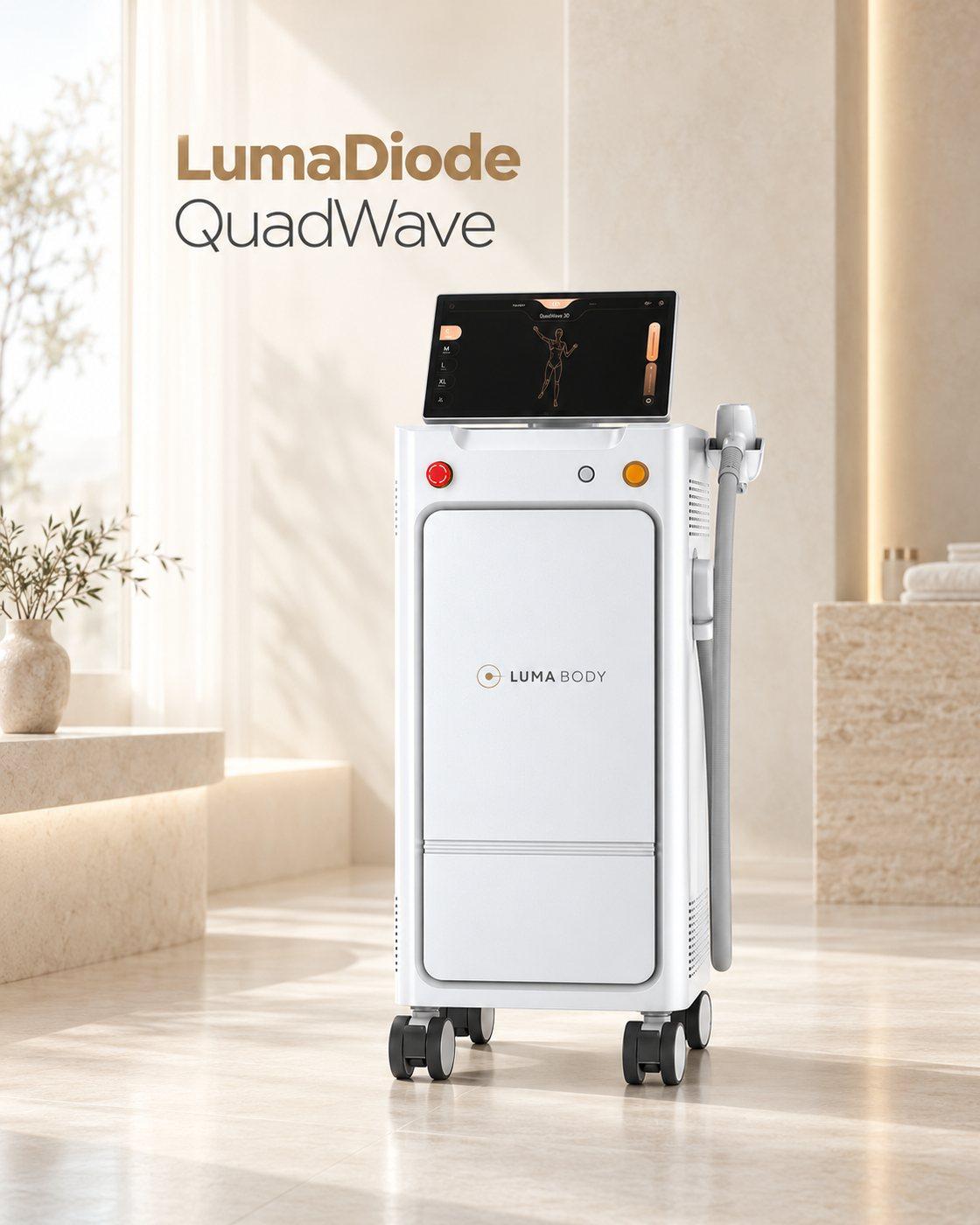
LumaDiode QuadWave — $17,900, delivered. 1800W, four wavelengths (755 + 808 + 940 + 1064nm), spot sizes up to 12x36mm plus a 6mm round tip, up to 20 Hz, contact cooling at 5°C with no gel. The fit for a clinic where hair removal is the main business and large areas fill the diary.
You can put them side by side on our TriWave vs QuadWave comparison.
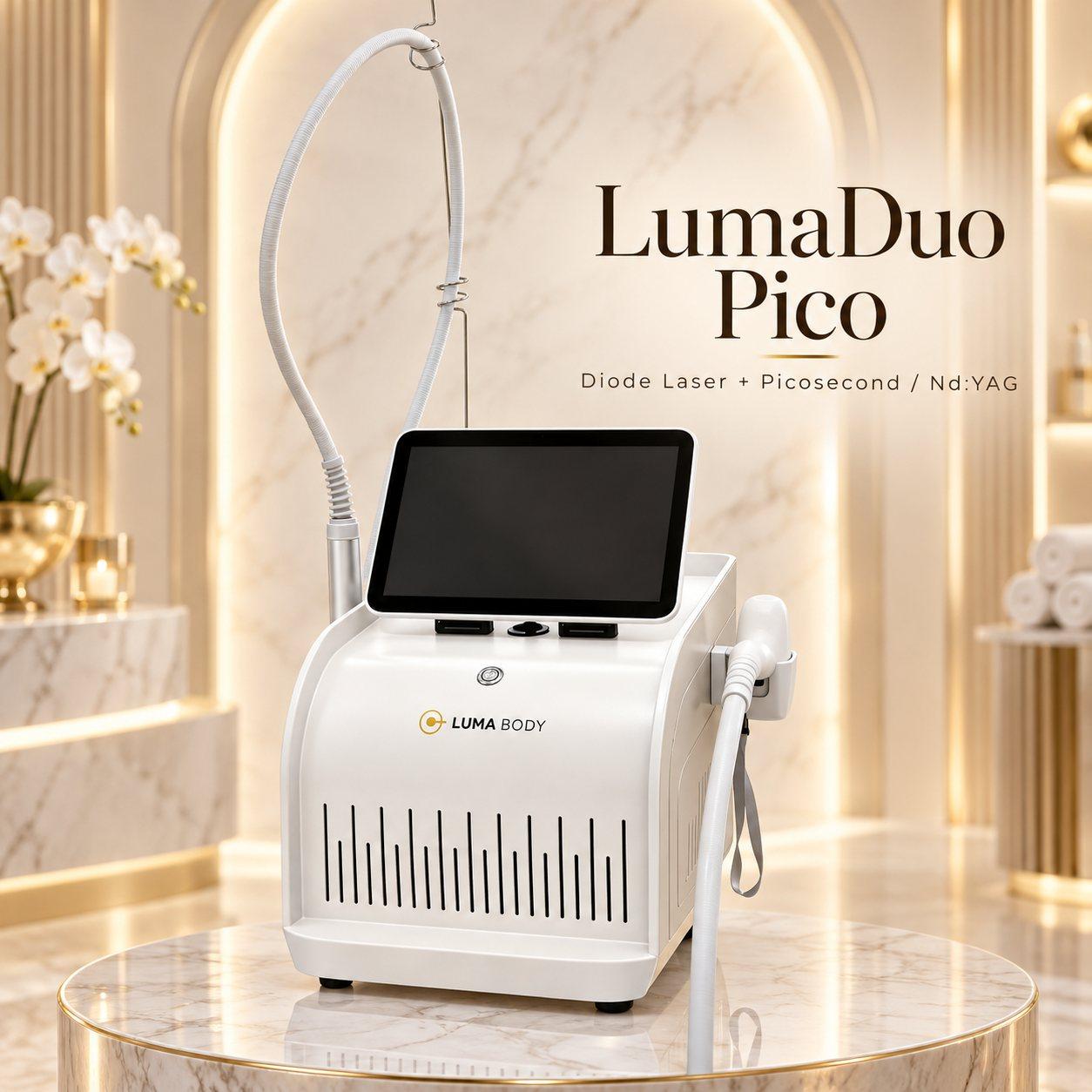
If you also want tattoo and pigment work from the same footprint, the LumaDuo Pico — $10,900 — pairs a four-wavelength diode with a pico Nd:YAG in one tabletop unit.
Every price above is the final price delivered to your practice in the US or Canada, with operator training and a 12-month machine warranty included, and you can start with a 50% deposit. If you are unsure which fits your client list, ask us: we would rather sell you the smaller machine that suits your room than the larger one that sits idle.