Ask five suppliers what a diode laser costs and you will get five requests for a phone call. Here is the actual range, and what moves a machine within it.
The range
A professional diode laser hair removal machine sells in the United States for roughly $4,000 to $30,000. That is not a useful number on its own, because the span covers three genuinely different classes of machine.
$4,000–$8,000. Single-wavelength 808nm, usually 600–1200W, one spot size, often a fan-cooled handpiece rather than contact cooling. These work. They are slower on large areas and less comfortable, and the handpiece is the part that will fail first.
$9,000–$18,000. Triple or quad wavelength, 1200–1800W, contact cooling at around 5°C, multiple spot sizes, a real console. This is where most working med-spas end up, because it is the cheapest tier that runs back-to-back full-body appointments without the operator fighting the machine.
$20,000–$30,000+. Branded systems from established manufacturers, usually with a US service network, financing and a familiar name on the front. You are paying for the support infrastructure and the brand, not for more watts.
What actually changes the price
Wavelength count. 808nm alone covers most of a treatment plan. Adding 755nm raises absorption for fine and light hair; 1064nm goes deeper and is the safer choice on darker skin, where epidermal melanin competes for the same energy. A quad-wavelength machine costs meaningfully more than a single, and for a practice serving all Fitzpatrick types it is the difference between taking a client and turning them away.
Laser power. 1200W versus 1800W is not marketing. Higher power at the same spot size means shorter pulses to reach the same fluence, which means faster passes and less time per appointment.
Cooling. TEC cooling is fine. Contact cooling that holds the sapphire tip near 5°C through a 10–125ms pulse is what removes the need for gel and for post-treatment icing. On a busy list this is the single largest difference in how long each appointment takes.
Spot size options. A 12×36mm spot covers a leg far faster than 10×20mm. A small round spot is what you need for a face.
What the price should already include
This is where quoted prices stop being comparable. Before comparing two numbers, confirm both include:
- Freight, customs and import duty. A machine quoted EXW or FOB is a machine you still have to import. Duty and a broker's fee on a $12,000 device is not a rounding error.
- Operator training. Ask what is included and what costs extra — basic operator training and one-to-one clinical training are usually priced differently.
- The warranty term, in writing, and specifically whether the handpiece is covered for the same period as the machine. Handpieces are the consumable part of a diode laser.
- Consumables and spares held in your country. A machine waiting three weeks for a part from overseas is a machine earning nothing.
What we charge
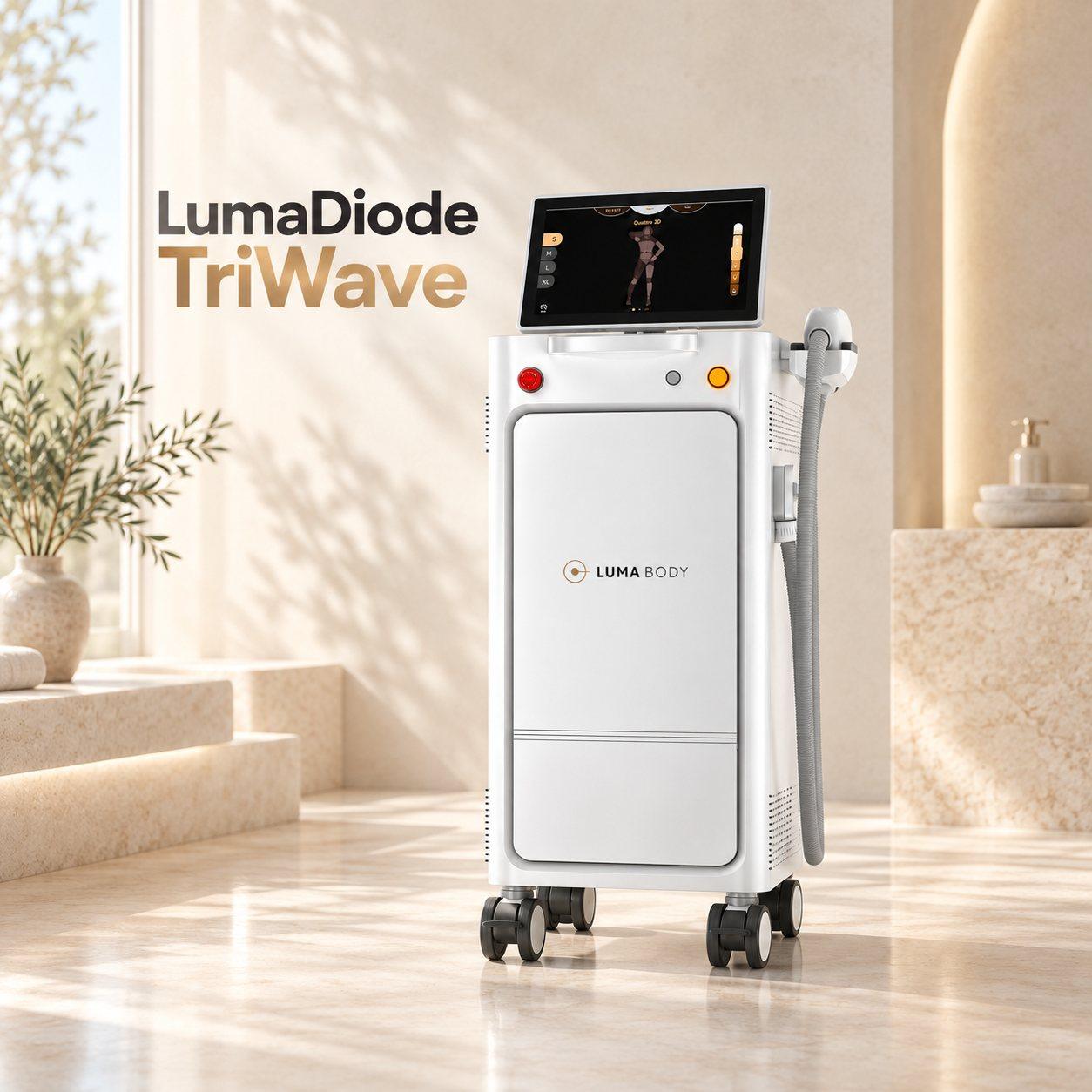
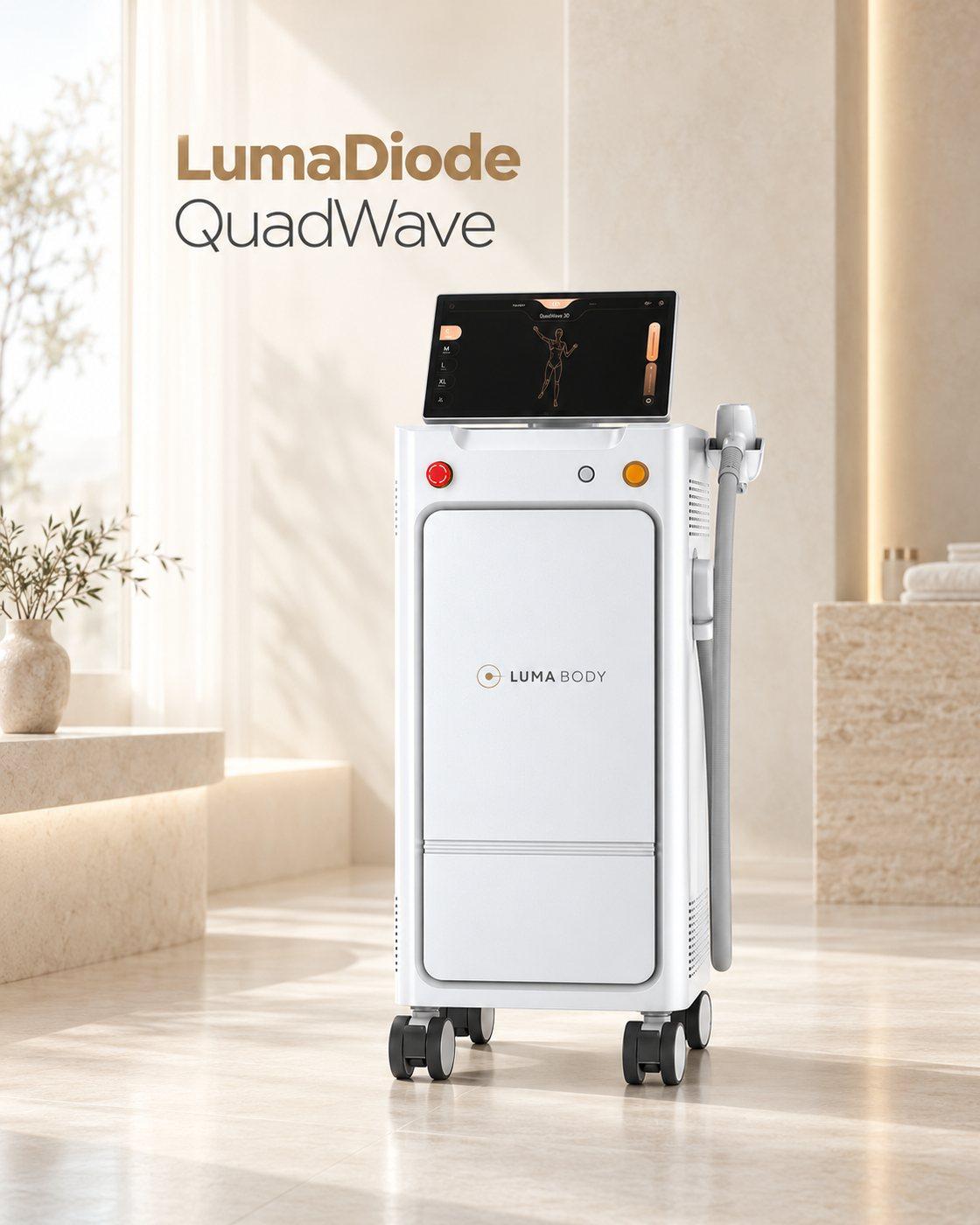
We publish ours rather than gating it: the LumaDiode TriWave at 1200W and three wavelengths, and the LumaDiode QuadWave at 1800W and four. Both prices include delivery, customs, duty, operator training and a 12-month warranty, and the configurator shows exactly what each option adds before you speak to anyone.
If a supplier will not tell you the price before a call, the price depends on how you sound on the call.