Every clinic that adds hair removal ends up asking the same question, usually after two sales reps have told it opposite things: diode laser or IPL?
They are not two versions of the same machine. They make light differently, they suit different clients, and they earn money at a different speed. Here is what actually separates them.
The short answer
Buy a diode laser if hair removal is a core service. It treats more skin types, needs fewer sessions and runs a full-body appointment faster.
Consider IPL if hair removal is a side service and you also want photofacials, redness and pigment treatments from the same device on a small budget.
The rest of this guide is the reasoning behind those two sentences.
How each one works
Laser hair removal of any kind relies on the same principle, selective photothermolysis: light is absorbed by the melanin in the hair shaft, turned into heat, and that heat damages the follicle's ability to regrow hair. The difference is in the light.
A diode laser produces one narrow wavelength. The common ones are:
- 755nm: strongly absorbed by melanin, good for fine and light hair on lighter skin.
- 808nm: the workhorse, balancing absorption and depth across most skin and hair types.
- 1064nm: penetrates deepest with the least absorption in the epidermis, used for deep follicles and darker skin.
Multi-wavelength diodes fire these together from one handpiece, so a single setting covers a much wider mix of clients.
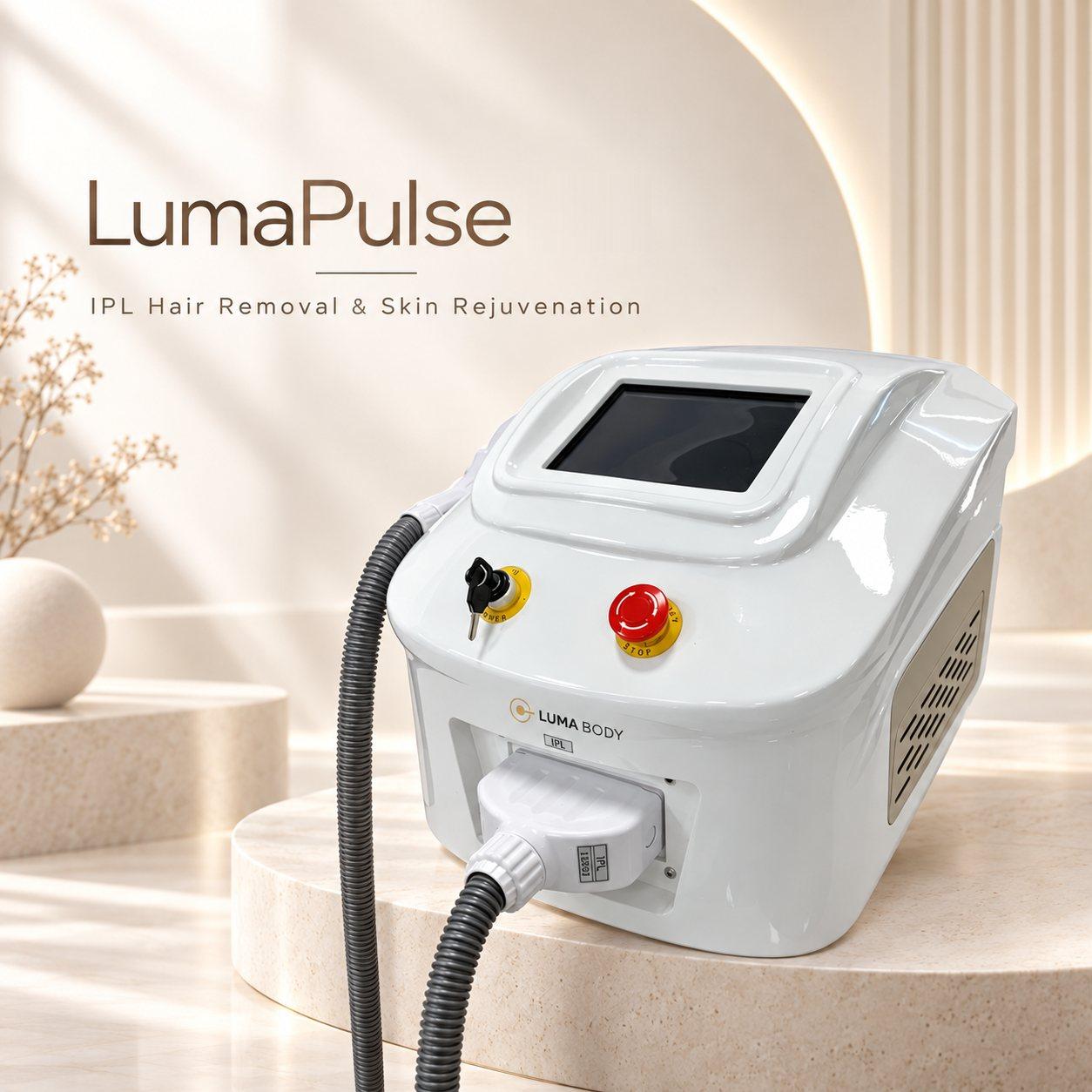
IPL is not a laser at all. A xenon flash lamp releases a broad band of light, roughly 500–1200nm, and a cut-off filter removes the shortest part of it. Much of the remaining energy sits at wavelengths the follicle does not absorb well, so to deliver enough heat to the hair, the machine has to put more total energy into the skin.
That single fact explains almost every practical difference below.
Side by side
| Diode laser | IPL | |
|---|---|---|
| Light source | Laser, 1–4 fixed wavelengths | Flash lamp, broad spectrum |
| Skin types | Fitzpatrick I–VI with 1064nm | Best on I–III |
| Hair colour | Dark to fine and lighter hair with 755nm | Needs dark hair on light skin |
| Typical course | 6–8 sessions | 8–12 sessions |
| Comfort | Contact cooling, stacking modes | Often gel and more heat on the skin |
| Full-leg time | Around 20 minutes on a high-power unit | Longer, smaller effective coverage |
| Main consumable | Handpiece lifetime | Flash lamps replaced by shot count |
| Other treatments | Mainly hair removal | Photofacial, redness, sun damage |
| Upfront cost | Higher | Lower |
Skin type is where clinics decide
The most expensive mistake in hair removal is buying a machine that cannot safely treat a third of the people who book.
Darker skin contains more melanin in the epidermis, and melanin cannot tell the difference between a hair and the skin around it. The shorter wavelengths in an IPL spectrum are absorbed heavily at the surface, which is why IPL carries a higher risk of burns, blistering and pigment change on Fitzpatrick IV–VI and is often simply not offered to those clients.
A diode laser with 1064nm reaches the follicle while passing through the epidermis with far less absorption. Combined with contact cooling, that is what lets a clinic say yes to every client who walks in, rather than turning away bookings in a diverse city.
If your market is anything other than uniformly fair-skinned, this row of the table decides the purchase on its own.
Sessions, speed and what that does to revenue
Fewer sessions sounds like less revenue. In practice it works the other way.
Clients measure hair removal by visible progress. A course that shows results after the second or third visit gets finished, recommended and re-booked for the next area. A course that drags into a tenth session gets abandoned, and abandoned clients leave reviews.
Speed matters just as much. A high-power diode with a large spot and a stacking mode, which builds heat over repeated low-fluence passes, can treat full legs in around twenty minutes. That is the difference between four and six hair removal appointments in a morning. Over a year, the room earns more from the faster machine even at the same price per session.
Comfort and aftercare
Diode handpieces with sapphire contact cooling hold the skin at around 5°C during the pulse. Most clients describe the sensation as warm snapping rather than burning, and many modern diodes work without gel.
IPL treatments put more heat on the skin surface, usually need cooling gel, and are more likely to leave redness afterwards. None of this is dangerous in trained hands on suitable skin, but it is noticeable to the client, and the client is comparing you to the clinic down the road.
Running costs nobody quotes
The sticker price is not the cost of the machine.
IPL flash lamps wear out. Each lamp or cartridge is rated for a set number of shots, and a busy clinic replaces them regularly. Ask for the lamp price and its rated shot count before comparing quotes, then work out what a year of your expected bookings costs in lamps.
Diode handpieces also age, but a quality diode bar lasts far longer, and a supplier's warranty should cover the handpiece, not just the console. Check that it does.
Then factor in the costs that come from the session count: gel, disposables, staff time and the room itself. A machine that needs four more visits per client consumes four more hours of a treatment room per client.
When IPL is still the right choice
IPL is not a bad technology. It is a different one, and it wins in a few situations:
- You mainly want skin treatments. Photofacials, diffuse redness, sun spots and uneven tone are where IPL is genuinely versatile.
- Your budget is under a few thousand dollars and hair removal is an occasional add-on.
- Your clients are almost all light skin with dark hair, the combination IPL handles best.
If two of those describe your business, an IPL can be a sensible first purchase. If hair removal is meant to fill a room five days a week, it usually is not.
Which one to buy
| Your situation | Buy |
|---|---|
| Hair removal is a core, high-volume service | Diode laser |
| You treat clients across all skin tones | Diode laser with 1064nm |
| You want fast full-body appointments | High-power diode with stacking |
| You mainly sell photofacials and pigment work | IPL |
| Very small budget, occasional hair removal | IPL |
What a diode laser costs to start
A professional diode laser sells in the US for roughly $4,000 to $30,000, and most working med-spas buy between $9,000 and $18,000. Our diode laser machine cost guide breaks down what moves a machine within that range.
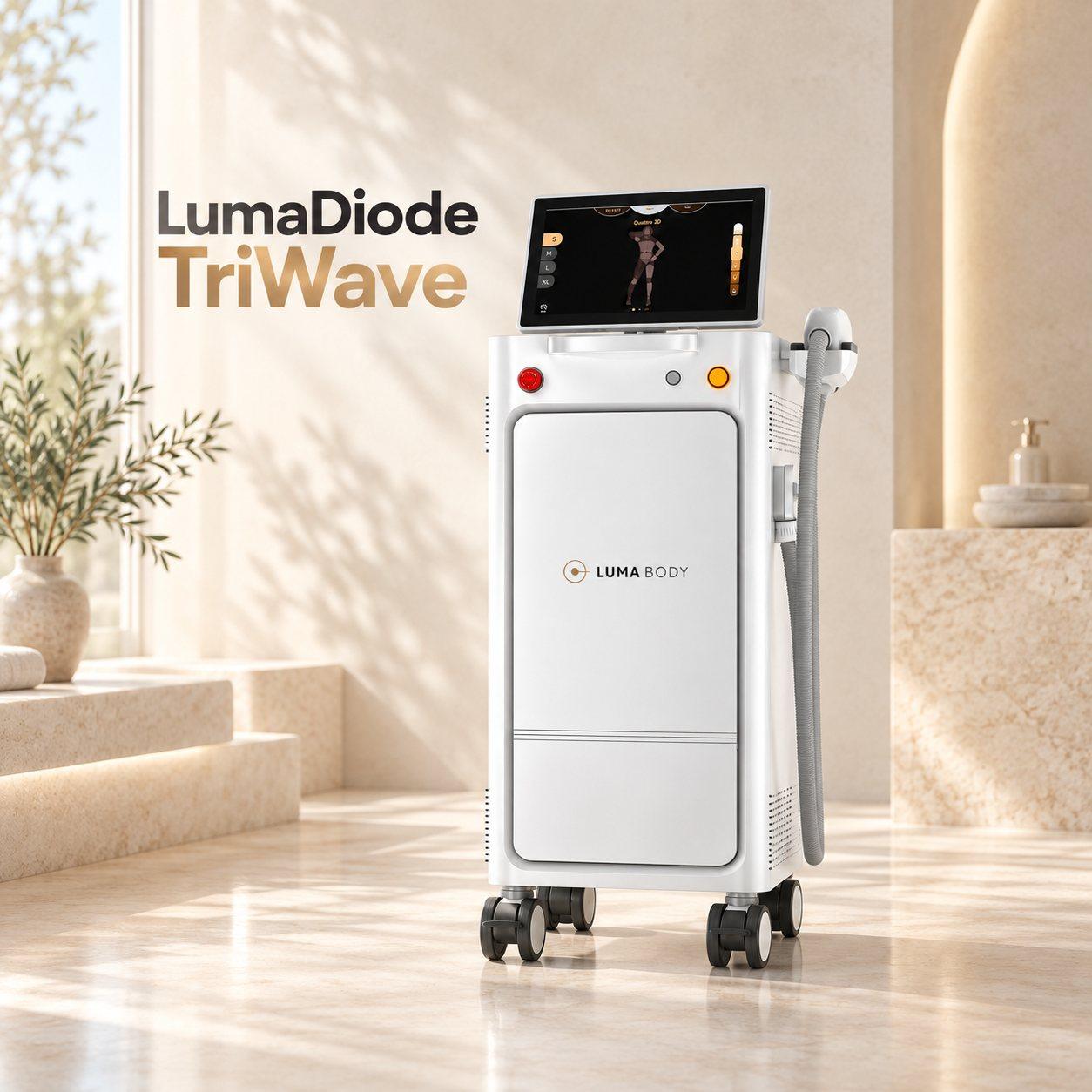
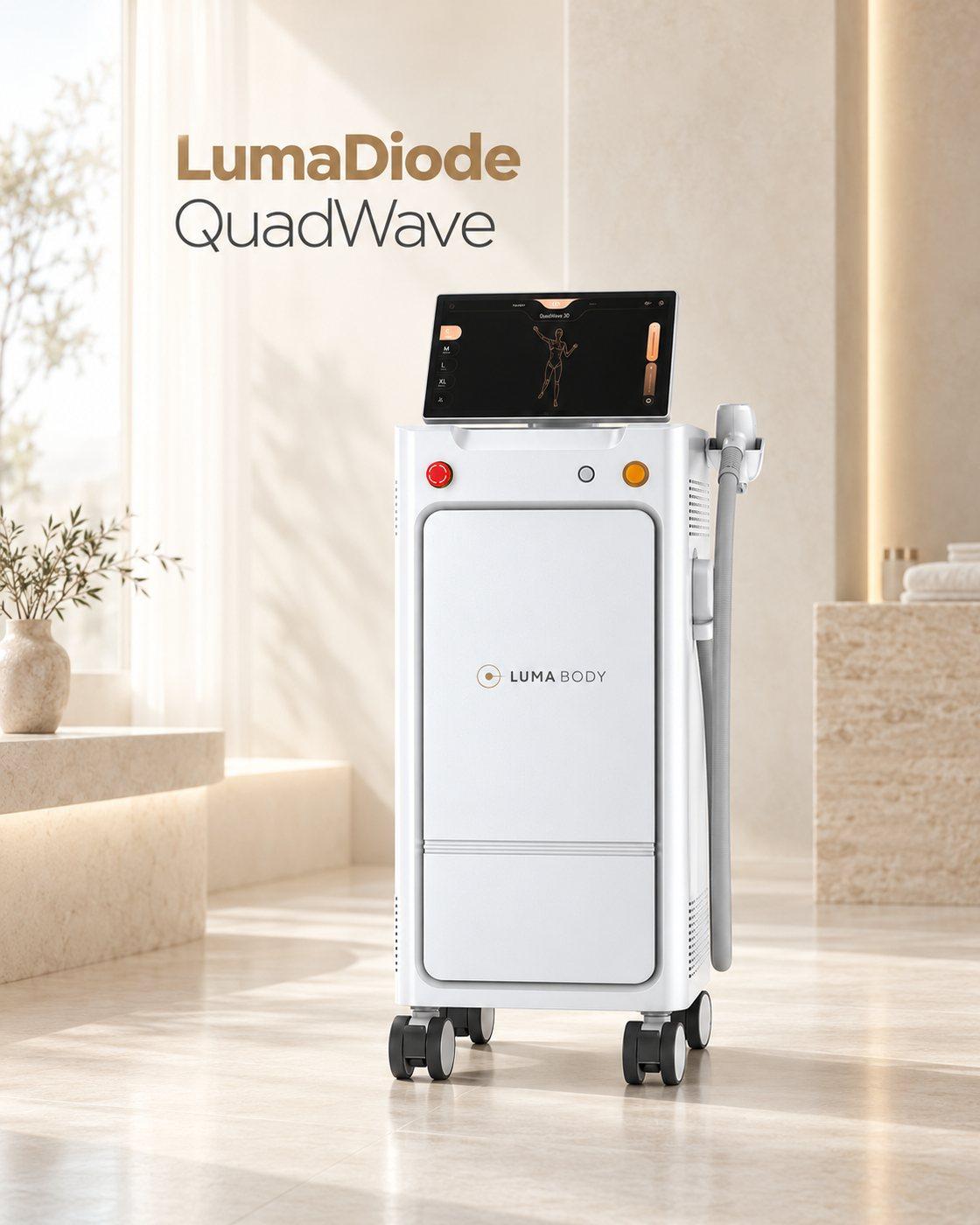
We sell two, both with published prices, delivered and duty-paid to the US and Canada: the LumaDiode TriWave, with 755, 808 and 1064nm at 1200W and SHR stacking in a compact footprint, and the LumaDiode QuadWave, with four wavelengths at 1800W, four spot sizes and 5°C contact cooling for gel-free full-body work.
If you are still deciding what else your treatment rooms need, start with what to check before buying med-spa equipment.