Every guide to buying a laser tells you what the machine costs. The number that actually matters is how many treatments it takes to earn that back, and how long your diary needs to produce them. Here is the arithmetic, with the assumptions left visible so you can swap in your own.
What clinics charge
US laser hair removal pricing varies by city and by how much the clinic spends on marketing, but the bands are consistent:
| Area | Typical price per session |
|---|---|
| Small — upper lip, chin, underarms | $75–$150 |
| Medium — bikini line, lower legs, forearms | $150–$300 |
| Large — full legs, full back, chest | $300–$600 |
Almost nobody buys one session. Hair grows in cycles, and a follicle is only reliably treated while it is actively growing, so a course is six to eight sessions spaced four to eight weeks apart. That is why clinics sell packages, and why a single client is worth several hundred to a few thousand dollars over a year rather than one appointment.
The payback arithmetic
Take a professional diode platform in the $12,000–$18,000 range, which is where a multi-wavelength machine with a real warranty and training sits. Take a conservative average of $200 per treatment, once packages and discounts are netted out.
- A $12,000 machine is covered by 60 treatments
- An $18,000 machine is covered by 90 treatments
Now the diary:
| Treatments per week | $12,000 machine | $18,000 machine |
|---|---|---|
| 2 | ~7 months | ~10 months |
| 5 | ~3 months | ~4 months |
| 10 | ~6 weeks | ~9 weeks |
This ignores operator time, rent and marketing, which you would pay whatever machine sat in the room. What it shows is simple: the difference between the cheaper and the dearer machine is a few weeks of bookings. The difference between a busy room and a quiet one is most of a year.
What it costs to run
This is where diode lasers are unusually kind to a clinic:
- No disposable tips. Nothing is thrown away per client.
- No gel on contact-cooled machines. A chilled sapphire tip replaces coupling gel and post-treatment icing, which saves both money and room time.
- Electricity is trivial against the price of a treatment.
The one real long-term cost is the handpiece, which is a wear part. It will eventually need replacing, and the price of that replacement is the most useful number to ask a supplier for. A cheap machine with an expensive handpiece is not a cheap machine.
The three things that decide the answer
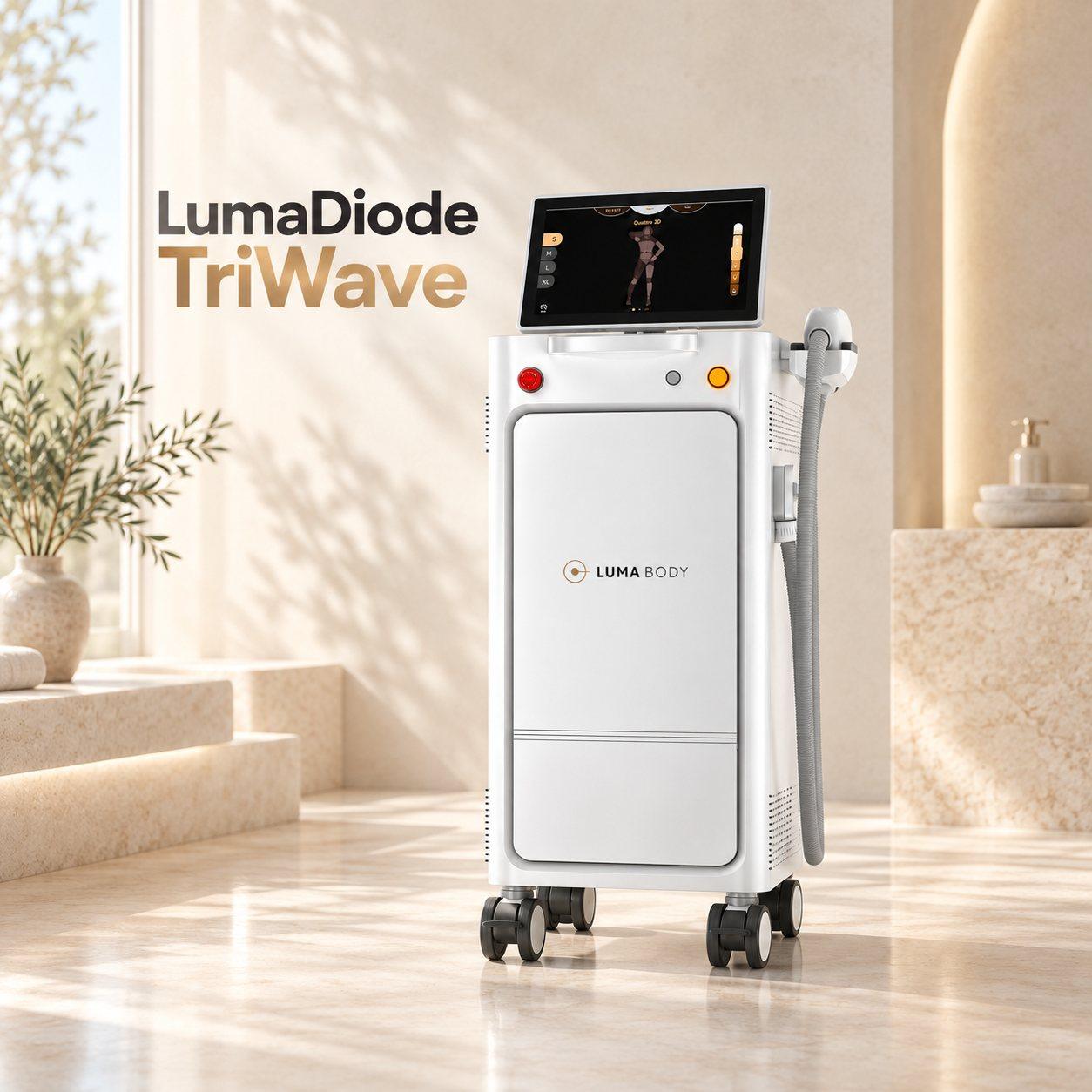
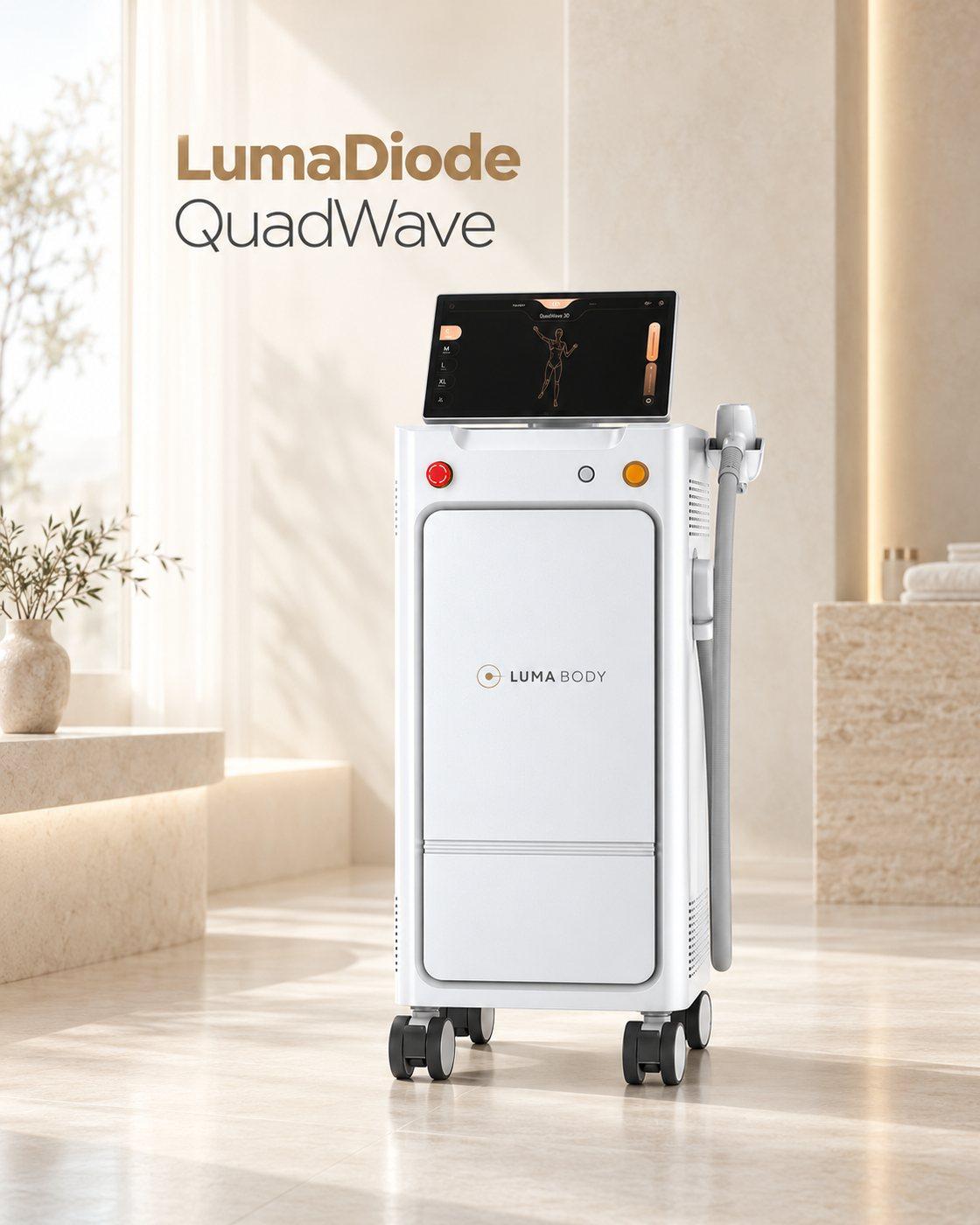
1. Speed per area. A full-leg treatment that takes 20 minutes instead of 45 doubles what the room can earn in an afternoon. Spot size and repetition rate decide this: a large spot fired at a high rate covers a leg in a fraction of the time. The LumaDiode QuadWave runs spots up to 12x36mm at up to 20 Hz for exactly that reason.
2. Who it can treat. A machine that works on light skin only turns away a large share of the clients who call. Multiple wavelengths in one handpiece — 755nm for fine and light hair, 808nm for most treatments, 1064nm for darker skin — mean the answer on the phone is yes. Both the TriWave and the QuadWave carry all three; the QuadWave adds 940nm.
3. Who can run it. If your state lets a trained technician fire the laser under supervision, the machine can work all day without taking a practitioner away from higher-value treatments. If it does not, plan the hours around the people who can. Check your state board before you plan staffing.
Where the money is lost
Clinics that do not recover a laser within a year usually made one of three mistakes:
- They bought for the best case. A machine sized for ten legs a day in a clinic that books five a week is money sitting in a corner.
- They priced below the market to fill the book, then could not raise prices on the clients they had trained to expect it.
- The machine was down. A laser that is waiting weeks for a part earns nothing. Ask how breakdowns are handled, how fast, and what the warranty actually covers — in writing.
The short version
A diode laser is one of the few machines in an aesthetic clinic whose payback is measured in months. The purchase price moves that by weeks. Bookings move it by seasons. Buy the machine your realistic diary can keep busy, confirm the handpiece cost and the warranty before you sign, and put the effort into filling the room.
For what separates a $4,000 machine from a $25,000 one, read what a diode laser hair removal machine actually costs. For how diode compares with IPL, read diode laser vs IPL.