Body sculpting is the treatment clients ask for by the brand name they saw on social media. That brand costs a clinic six figures. The physics it runs on does not. Here is what the machines cost, what the numbers on the spec sheet actually change, and how the treatment earns its keep.
What it costs
| Class | Typical delivered price |
|---|---|
| Two-applicator HIFEM machine | $7,000–$12,000 |
| Four-applicator HIFEM machine | $10,000–$20,000 |
| Four applicators with synchronous RF | $12,000–$22,000 |
| Branded system with its own marketing programme | Six figures |
The gap between the last line and the rest is not a gap in technology. Every one of these machines works the same way: a pulsed magnetic field induces a current in the motor nerves, and the muscle contracts harder and more often than a client could manage voluntarily. What the branded price buys is the name clients search for and the marketing kit around it. Whether that is worth the difference depends on how much of your demand comes from people who already know the brand.
What the spec sheet actually changes
Field strength (tesla). A stronger field drives a stronger contraction. Large applicators on professional machines run around 5–6 T; small applicators for arms sit lower. Beware of a headline number with no mention of which applicator it refers to, or whether it holds for a full 30-minute session. A machine that backs off its output as it heats up is weaker than its brochure.
Frequency range. Low frequencies produce individual twitches, high ones a sustained contraction. A range of roughly 1–150 Hz lets one machine run everything from warm-up to the high-intensity phase of a protocol.
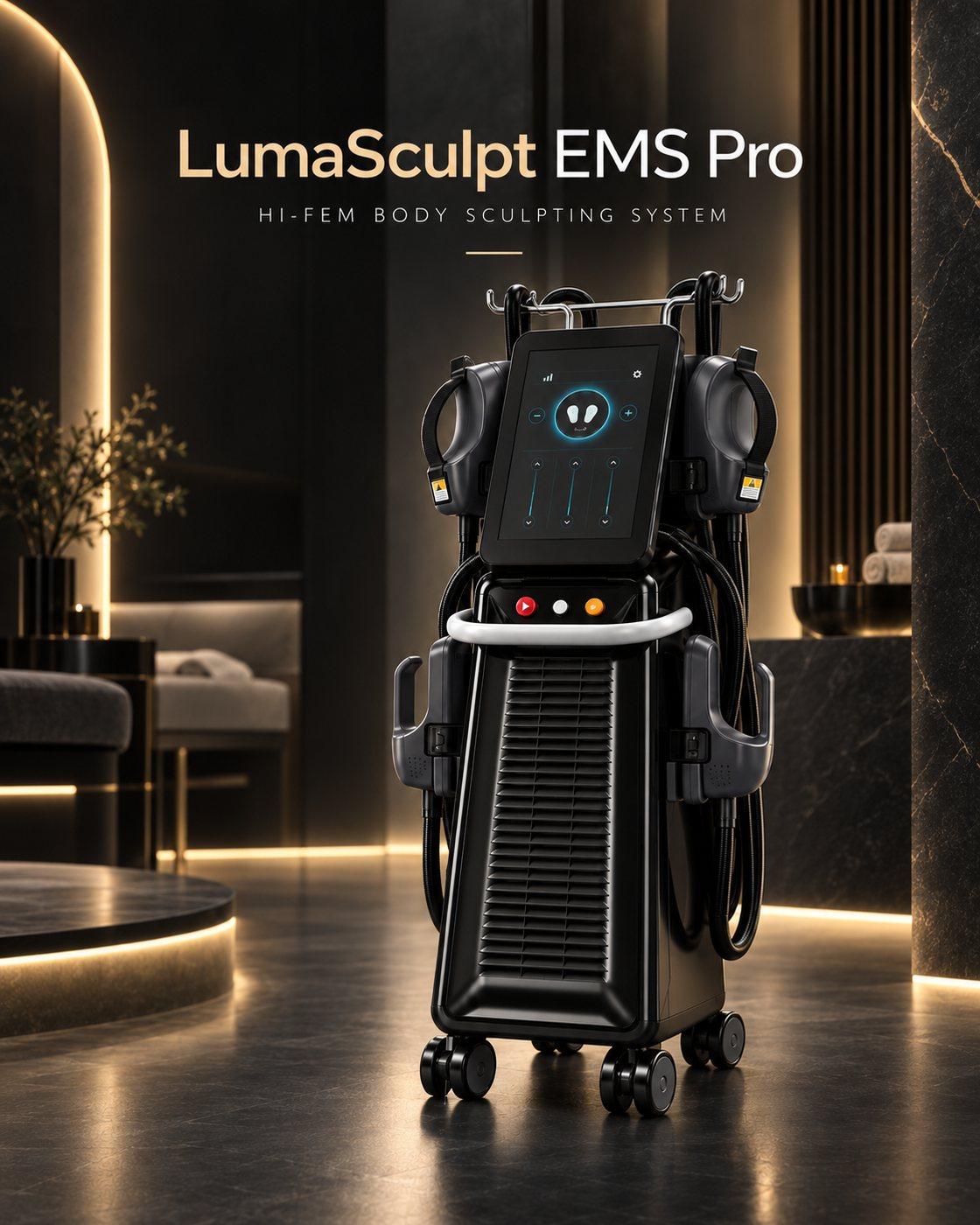
Applicator count. This is the number that decides revenue. Four applicators means abdomen and both flanks, or glutes and both thighs, in one 30-minute placement instead of two or three appointments. The LumaSculpt EMS Pro ships with four as standard, with the two-applicator version as the cheaper option.
RF. A radiofrequency module heats the tissue under the same applicator during the session. It turns a muscle treatment into a combined contouring treatment, which is easier to sell and easier to price higher.
Cooling. Air-cooled applicators keep output stable through back-to-back sessions. Ask how many sessions the machine will run in a row before it needs a rest.
How it pays back
The arithmetic is favourable because the treatment runs itself once the applicators are placed:
- Around 30 minutes per placement, with no anaesthesia and no downtime
- Sold as a course of four, so one consultation fills four appointment slots
- Delegable once the operator is trained, depending on your state's rules
- Two areas at once with four applicators, billed as two
Take a four-applicator machine at the upper end of the range and a conservative package price. A handful of four-session packages covers the machine. A clinic that sells two packages a month recovers it inside the first year; one that sells a package a week recovers it in a few months.
The running costs are low. There are no consumable tips; the ongoing items are belts and eventually applicator wear. Ask for replacement applicator pricing before you buy.
What to be honest with clients about
EMS builds and tones muscle. It is not a weight-loss treatment, and it works best on clients who are already near their goal and want definition. Clinics that sell it that way get the reviews. Clinics that sell it as fat loss get the refund requests.
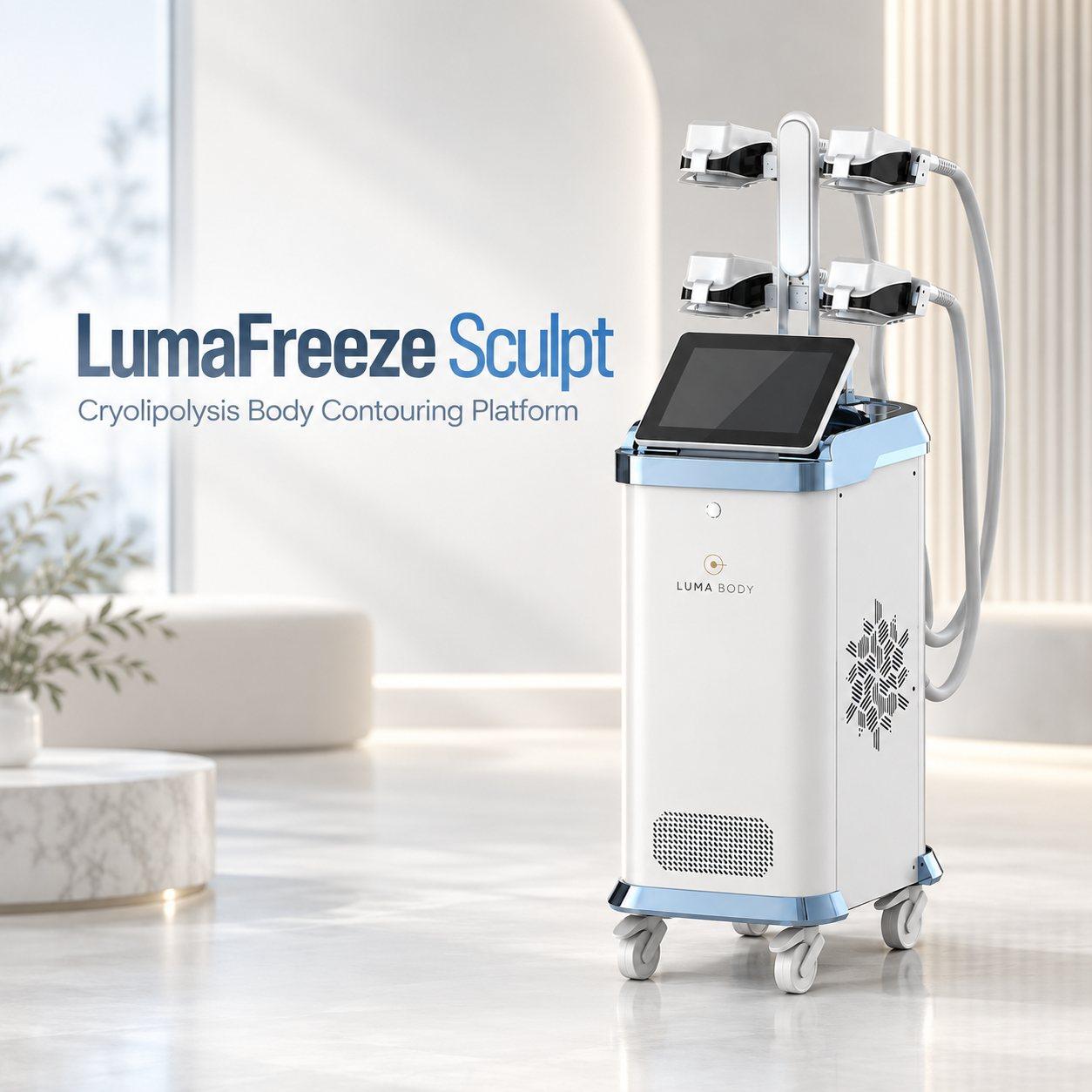
For clients whose concern is a stubborn fat layer rather than muscle tone, cryolipolysis is the better fit, and many clinics run both. Read cryolipolysis vs EMS body sculpting for how to decide, and what a cryolipolysis machine costs for the other half of the room.
Before you buy
- Tesla per applicator, and whether it holds for a full session.
- Applicator count and price per extra applicator, in writing.
- Warranty on the machine and on the applicators separately, since the applicators do the work.
- Training, because a well-placed applicator is most of the result.
Then run the general checks in eleven things to check before buying any med-spa machine.