A new clinic wants to sell hair removal, skin rejuvenation, pigment and tattoo work, and something for texture or lifting. Bought one at a time, that is four machines, four footprints and a five-figure sum each. A multifunction workstation puts the same four handpieces on one console for a fraction of the price. Whether that is a smart start or a false economy depends on how you plan to use it.
What they cost
| Configuration | Typical delivered price |
|---|---|
| Diode + pico, compact 2-in-1 | $9,000–$12,000 |
| Diode + IPL + Nd:YAG/pico + RF or RF microneedling | $12,000–$18,000 |
| Diode + RF microneedling + HIFU | $14,000–$18,000 |
| The same treatments as separate machines | Two to three times more |
Ours, with their current delivered prices:
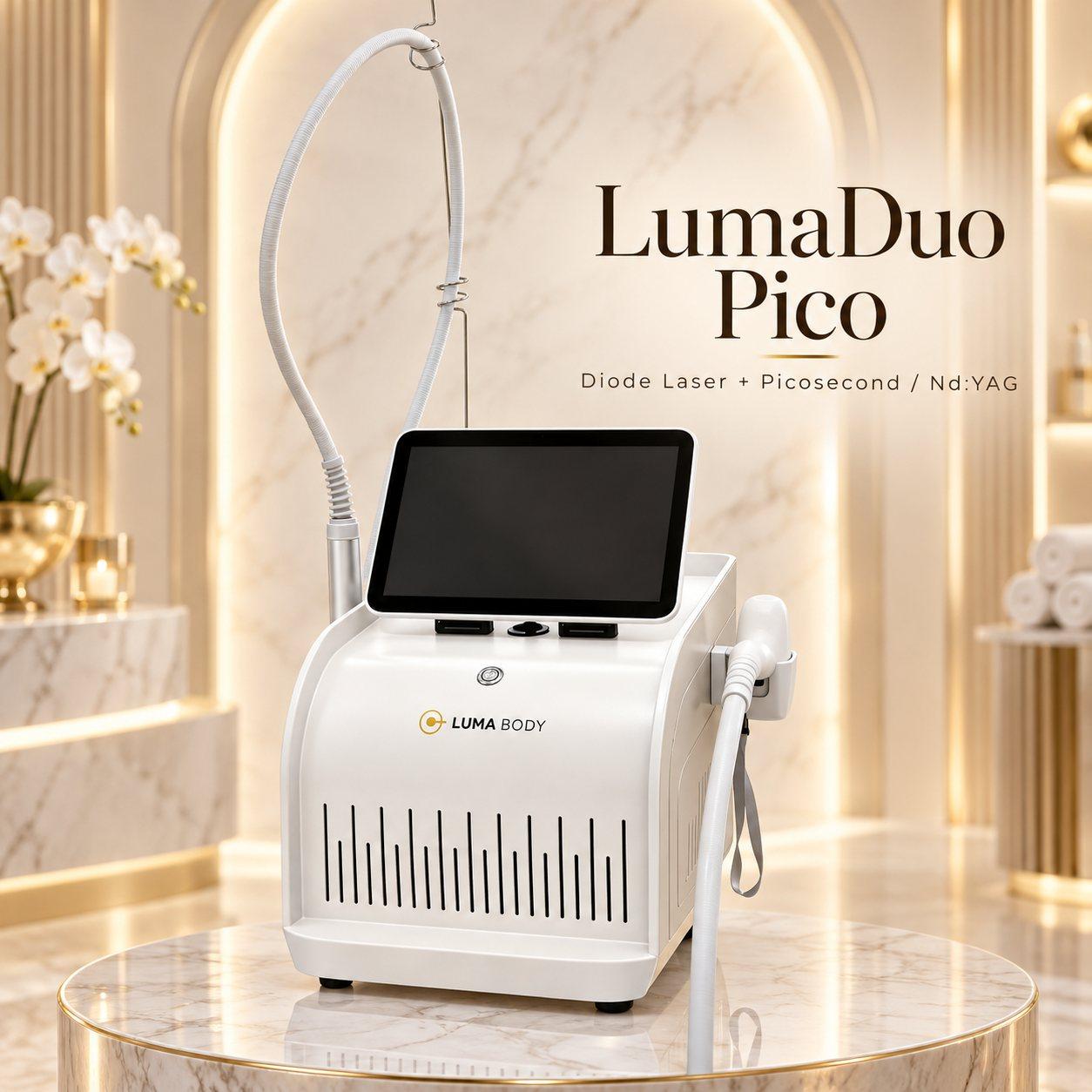
- LumaDuo Pico, diode and pico in a tabletop unit — $10,900
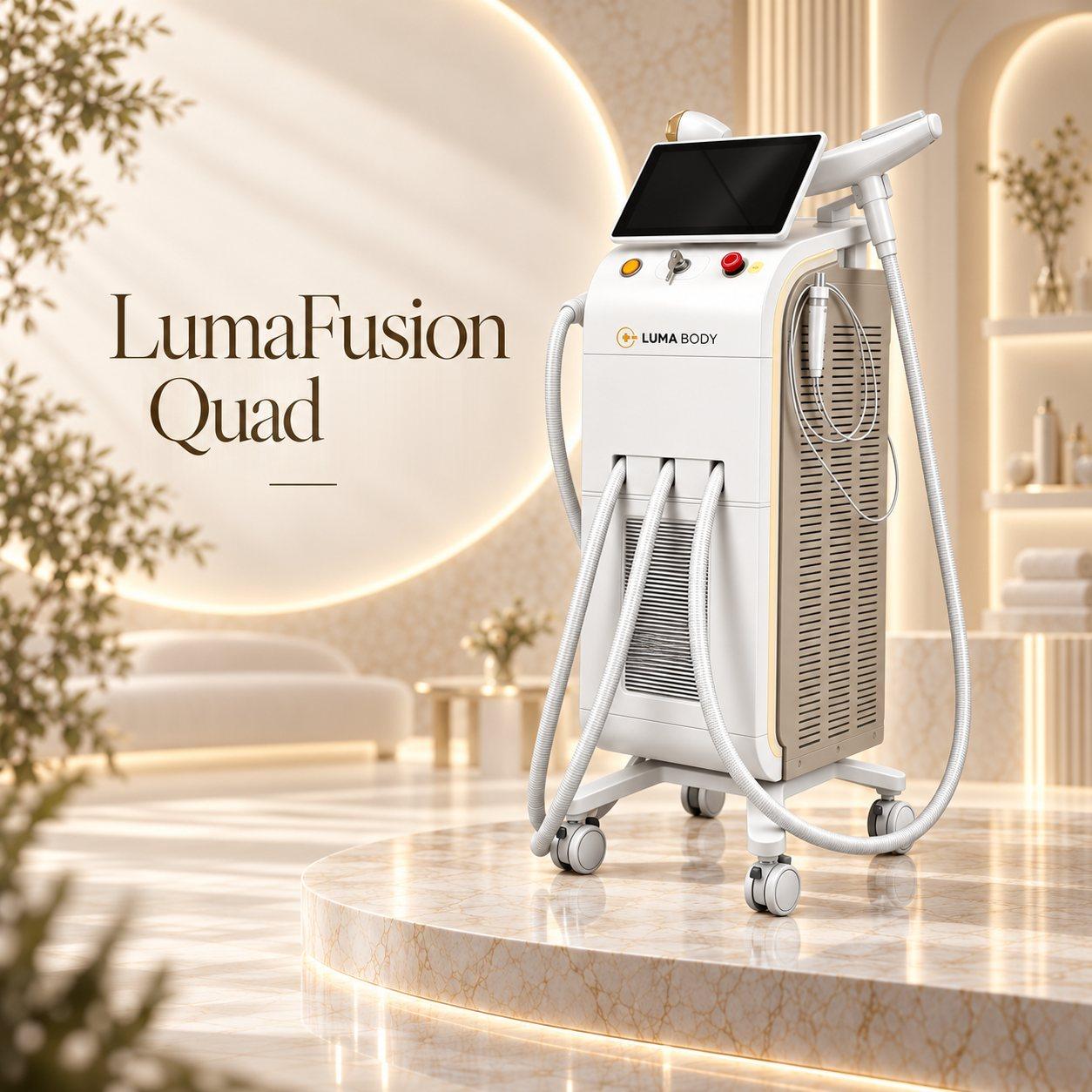
- LumaFusion Quad, diode, IPL, Nd:YAG and RF — $13,900
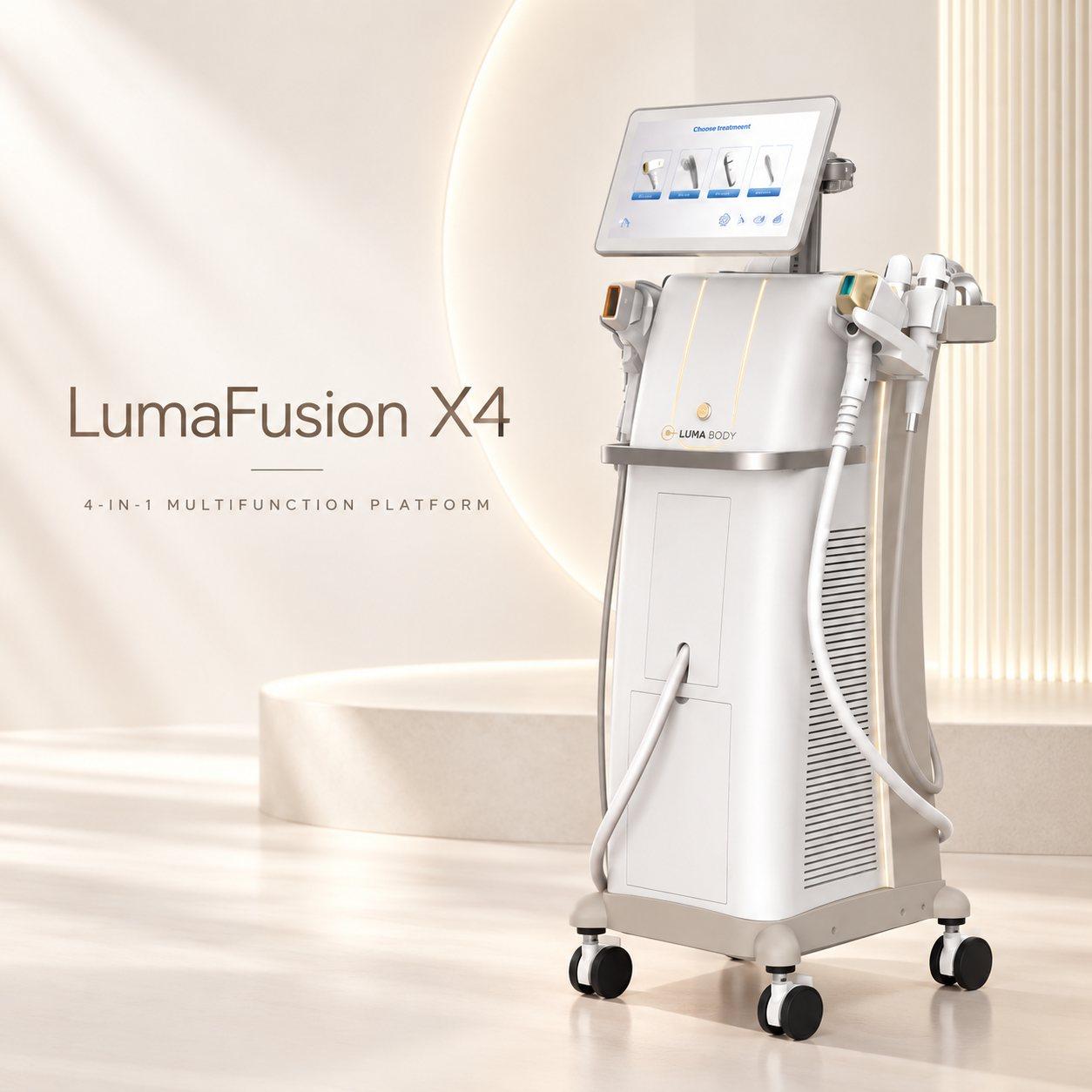
- LumaFusion X4, diode, RF microneedling with 980nm, and HIFU — $15,900
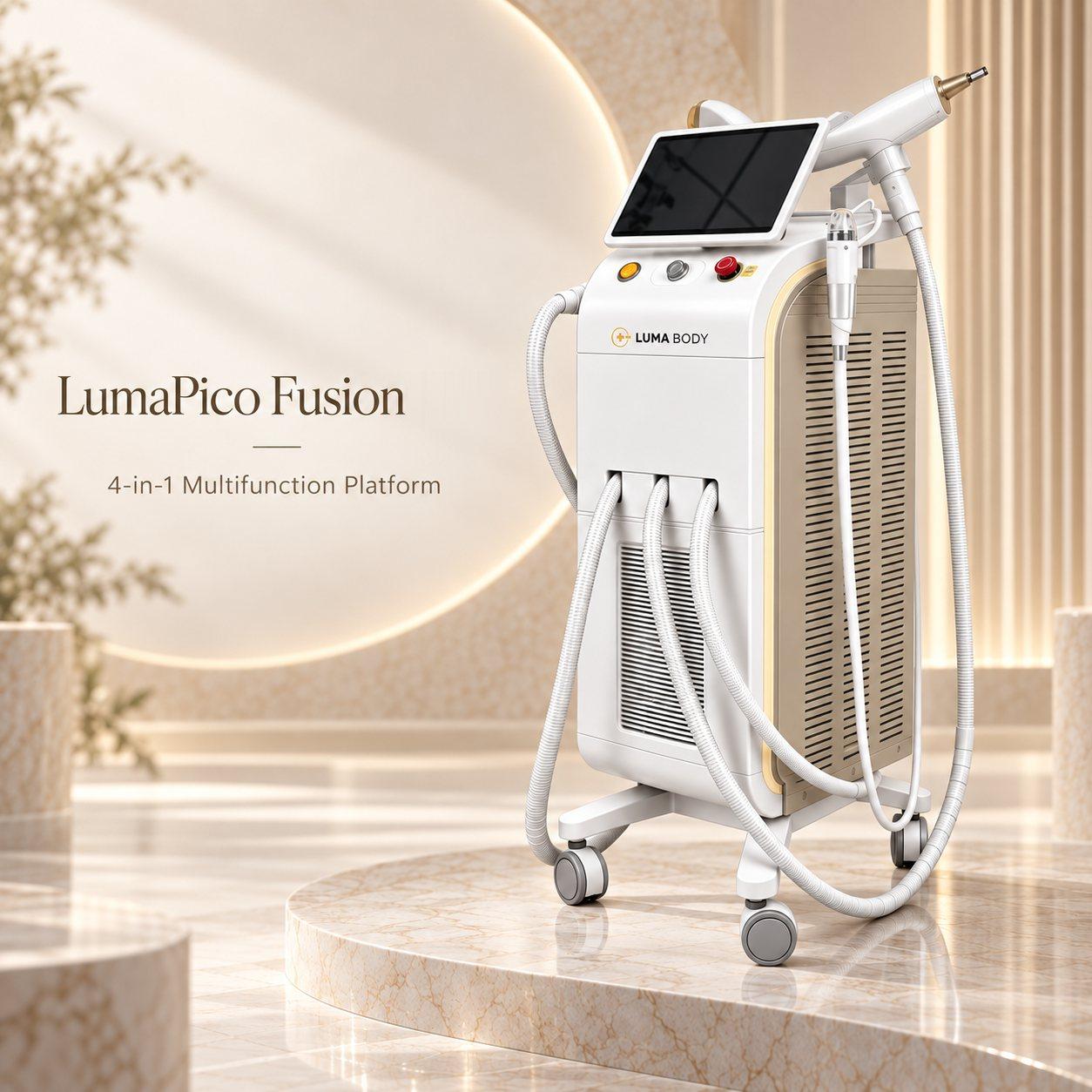
- LumaPico Fusion, diode, IPL, pico and RF microneedling — $17,900
Match the handpieces to your menu
The mistake is buying the machine with the most functions. The right one is the machine whose handpieces are the four treatments you will book every week.
Hair removal, photo-facials, pigment and tattoos. A diode, an IPL with a full filter set, and a pico or Nd:YAG handpiece. This is the classic general aesthetic clinic, and it is what the LumaFusion Quad and LumaPico Fusion are built for.
Hair removal, texture and lifting. A diode, RF microneedling and HIFU. This suits a clinic whose clients come for skin quality and firmness rather than pigment, which is the LumaFusion X4.
Hair removal and tattoo removal only. A two-in-one diode and pico unit, the cheapest way into both services and small enough for a single room.
Five checks before you buy
- Cooling. Every handpiece shares one cooling loop. Water circulation combined with TEC or compressor cooling and a sapphire contact window is what lets the diode run a full list without pausing.
- Diode wavelengths and spot size. Three or four wavelengths in one handpiece, and a spot large enough for legs and backs.
- IPL filter count. Seven filters from 420 to 755nm cover acne, redness, pigment, rejuvenation and hair; fewer filters means fewer treatments.
- Pico or Nd:YAG tips. Fixed 1064 and 532nm tips for ink and pigment, and a 1320nm tip for carbon peel, are the working set.
- Service. One console carrying four treatments means a fault stops four revenue lines. Ask how a failed handpiece or power board is replaced, and how fast.
When to buy separate machines instead
If one treatment is most of your revenue — a hair removal studio running legs all day, or a tattoo removal clinic — buy the dedicated machine for it. A dedicated diode laser has a larger spot and higher repetition rate for volume work, and a dedicated picosecond tattoo laser adds the top-hat beam, articulated arm and dye handpieces that multi-colour work needs. A multifunction workstation is the right buy when breadth is the business.
For how the underlying technologies compare, read diode laser vs IPL and what an IPL machine costs.