This is the machine most clinics should buy first, and the one most buying guides ignore because it is not a laser. It costs a fraction of a resurfacing platform, it needs no anaesthesia, an aesthetician can run it, and clients rebook it monthly without being persuaded.
What it costs
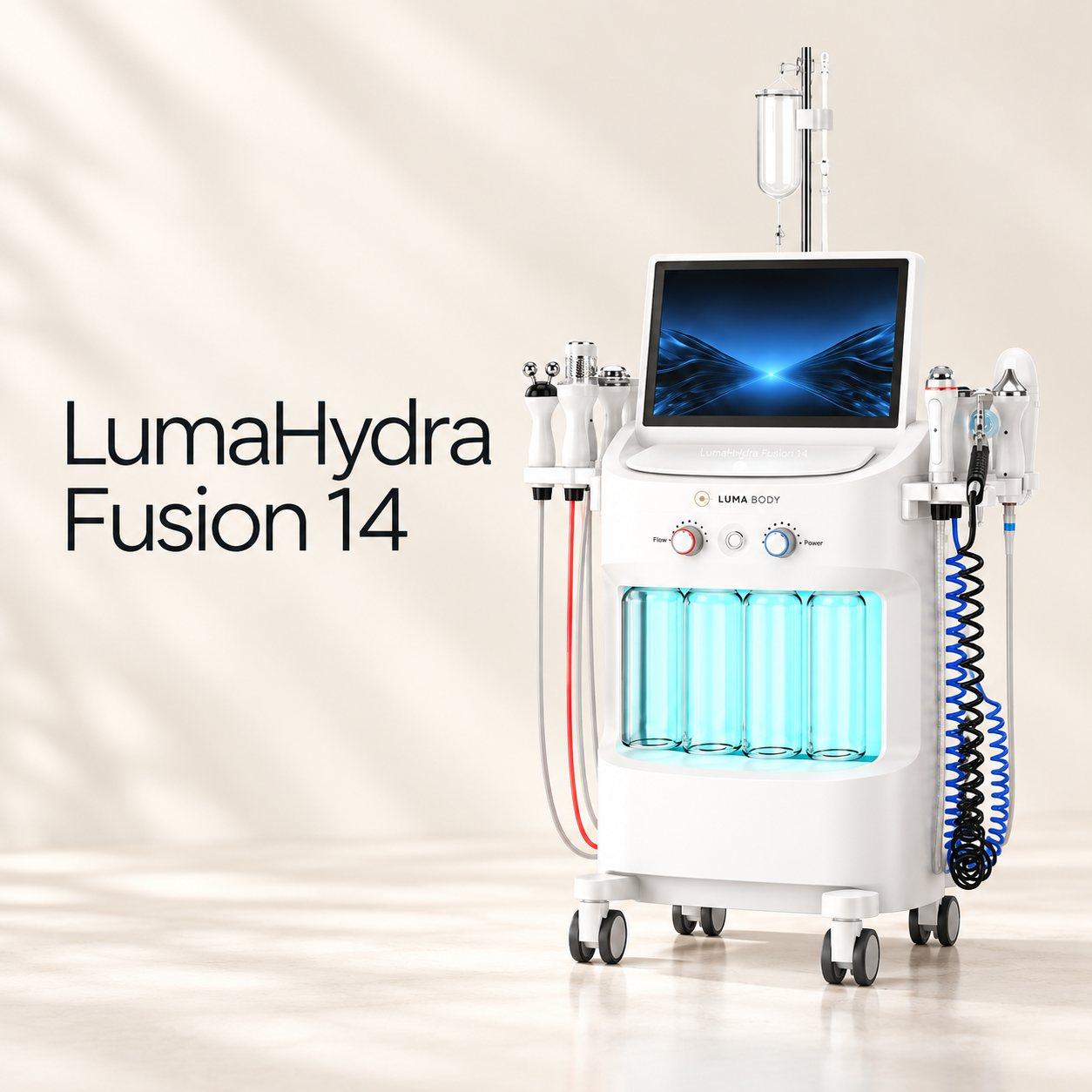
$6,000–$11,000 for a professional multi-function platform delivered to a US clinic. The LumaHydra Fusion 14 sits at $8,900 delivered.
Branded systems run several times that, and the sticker price is not where the difference ends. Ask what the tips and solutions cost per treatment, and whether the machine will run anything but the manufacturer's own. A platform locked to proprietary consumables is a subscription with a machine attached. On a treatment you intend to run several times a day, the consumable cost decides your margin far more than the purchase price does.
What it actually does
A spiral tip and a vacuum work at once: the tip abrades the surface, the vacuum lifts loosened debris out of the pore, and serum is drawn across the skin in the same pass. The waste ends up in a jar the client can see, which is worth more commercially than most clinicians expect.
Working wet is what separates it from microdermabrasion. Dry crystal or diamond abrasion sensitises skin and rules out a lot of clients. Wet treatment is gentle enough for most skin types and produces a visible result the client can see in the mirror before they have left the room — which is why it rebooks.
The truth about "14-in-1"
Fourteen functions on one trolley sounds like fourteen treatments you can bill. It is not. In practice, four to six carry the menu:
The ones you will use daily
- Hydra peel — the core treatment, and the reason to own the platform
- Ultrasonic skin scrubber — cleansing and light exfoliation
- RF — mild tightening, upsells well as an add-on
- LED — low effort, low risk, easy to bundle
- Oxygen — sells on sensation as much as on outcome
The ones you will use occasionally
Plasma pen, high-frequency, microcurrent, cold hammer and ultrasound infusion all have real protocols behind them. They earn their place when a specific client needs them, not as everyday revenue.
So judge a platform on how well it does the first group. A machine with strong vacuum, a well-made handpiece set and reliable tips beats one with a longer feature list and a weaker pump. Function count is a marketing number. The pump, the tips and the handpieces are the machine.
Why it pays fastest
The arithmetic is unusually favourable, and it is nothing to do with price per treatment — a hydra facial bills a fraction of what a laser course does. It is about everything around the treatment:
- No anaesthesia, so no numbing time occupying a room
- 30 to 45 minutes, so the room turns over several times a day
- Delegable, so it does not consume the practitioner who could be injecting
- No downtime, so it can be booked at lunchtime and before events
- Monthly rebooking, because the effect is real but temporary
That last point is the whole business case. Most aesthetic devices sell a course and then wait months for the client to need another. This one sells a habit.
Where mesotherapy fits alongside it
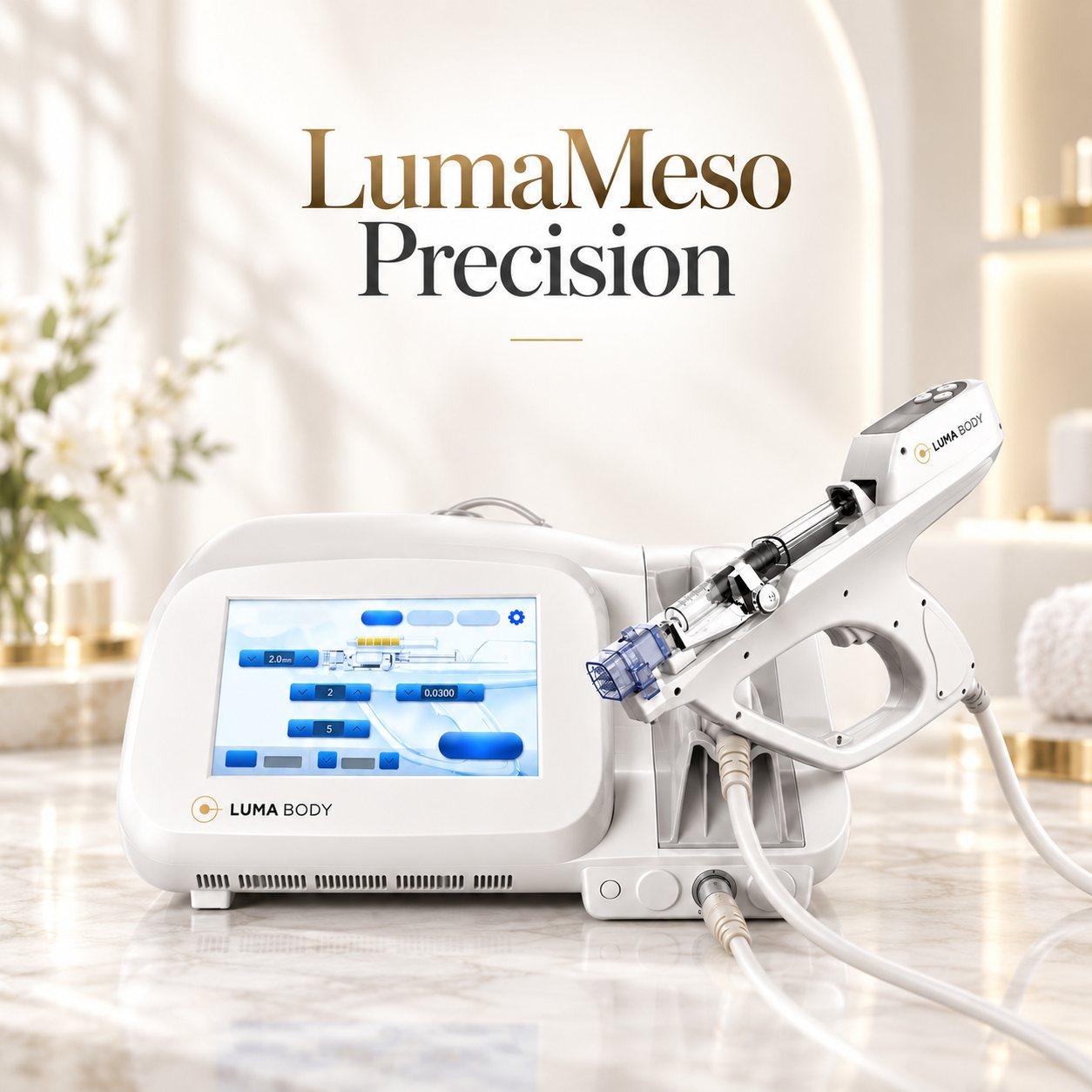
Clinics that add a second facial device usually add controlled injection rather than another surface treatment, because it reaches what topical infusion cannot. A vacuum-assisted injector with depth control in 0.2mm steps to 4mm and a fine multi-pin array — the LumaMeso Precision configuration — makes dosing repeatable between practitioners, which is the part that decides whether the treatment can be delegated safely.
The pairing works because they sell to the same client at different price points: hydra dermabrasion as the monthly habit, mesotherapy as the course.
Before you buy
Run the general checks in eleven things to check before buying any med-spa machine, and add three that are specific to this category:
- Consumable cost and lock-in, per treatment, in writing.
- Vacuum strength and stability, because a pump that fades mid-session turns a good treatment into an average one.
- Handpiece build, since these are handled hundreds of times a month and are the first thing to fail.
If you are opening a room and can only buy one machine, this is usually it. Not because it is the most impressive thing you can own, but because it is the one that fills the diary while the expensive machines wait for their clients.