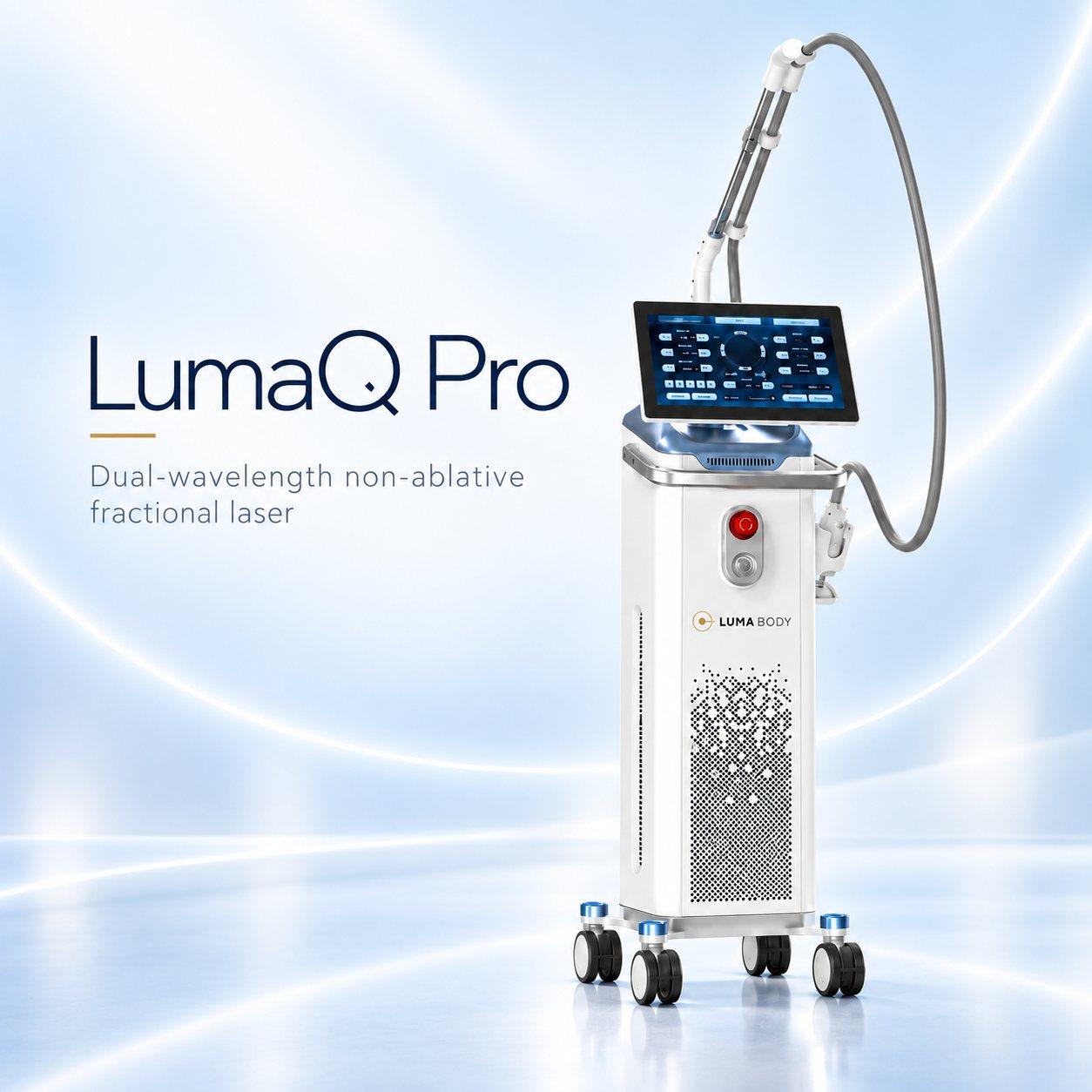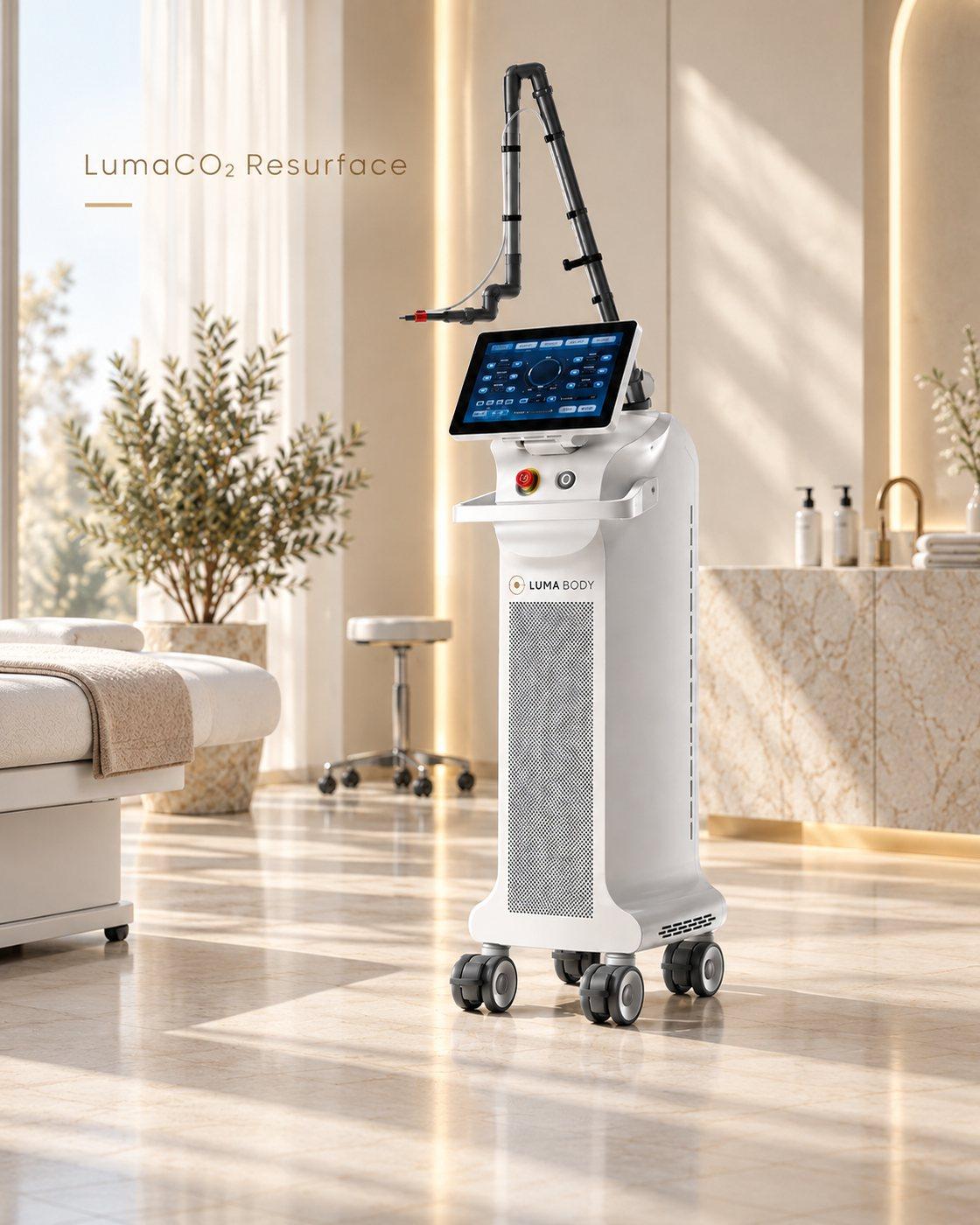
Both of these are sold as "resurfacing", both improve texture, tone and photodamage, and the decision between them has almost nothing to do with which is better. It has to do with how many days your clients are willing to look like they had something done.
The short answer
CO2 removes tissue. 1927nm heats it without removing it.
That single difference sets the recovery, the risk profile, the number of sessions, and the kind of client who will book.
What each wavelength is doing
10,600nm CO2 is absorbed extremely strongly by water, which in practice means it is absorbed by everything in skin. Fire it in a fractional pattern and each spot vaporises a column of tissue clean through the epidermis into the dermis. Around each column sits a rim of coagulated tissue, and between them sits untreated skin that supplies the cells to heal it. The wound is real, the collagen response is strong, and the skin is open for several days.
1927nm is also a water-absorbing wavelength, but weakly enough that its energy deposits in the superficial epidermis rather than punching through it. Tissue is coagulated in microscopic columns and then shed over the following days as the epidermis turns over. No open wound. Pairing it with 1550nm, which reaches further into the dermis, covers surface pigment and deeper remodelling on the same platform — the arrangement used on the LumaQ Pro.
A note on naming, because it causes real confusion: 1927nm is a fibre laser defined by its wavelength and pulse duration in the millisecond-to-microsecond range. It is not a picosecond laser and does not do a picosecond laser's job. If tattoo removal is what you are after, that is a different machine entirely.
Downtime, honestly
| Fractional CO2 | 1927nm non-ablative | |
|---|---|---|
| Skin barrier | Open, 5–7 days | Intact throughout |
| Visible recovery | 5–7 days, occasionally longer | 2–4 days of bronzing and flaking |
| Typical course | 1–3 sessions | 3–5 sessions |
| Anaesthesia | Topical, usually 45–60 min | Topical, often optional |
| Risk in darker skin | Meaningful PIH risk | Lower, still requires care |
| Client can work through it | No | Usually yes |
The last row sells more machines than any other. A client who cannot take a week off will not book ablative treatment, however good the before-and-afters are.
Match the machine to the complaint
Choose fractional CO2 when the work is acne scarring, deep perioral and periorbital lines, significant photodamage, or surgical scar revision. These need tissue removed. Look for real power — 40W handles most clinic work, 70W gives headroom on scar revision — plus multiple scan patterns and beam shapes, because treating a cheek and a lower eyelid with the same pattern is how practitioners get into trouble. That is the specification on the LumaCO2 Resurface.
Choose 1927nm when the work is melasma, sun-induced pigmentation, dullness, early photoageing and maintenance for clients who come back quarterly. It is also the safer platform for a practice that treats a wide range of skin types, and the easier one to train a new injector or aesthetician onto.
The commercial argument nobody makes
CO2 is higher revenue per session. Non-ablative is higher revenue per client per year.
One ablative course of two sessions might bill more than a five-session non-ablative course. But the non-ablative client comes back — for maintenance, in visible-skin season, before events — and they book without needing a week cleared. If your calendar problem is filling it rather than pricing it, non-ablative is usually the better business.
If you can only run one, the honest question is not which laser is better. It is what your existing clients would say if you told them their skin would be raw for five days.
What to check before you buy either
The general checklist applies — consumables, service, training and what the warranty actually covers are in eleven things to check before buying any med-spa machine. Two things matter more here than elsewhere:
- The scanner, not the source. Resurfacing quality is set by how evenly and repeatably the beam is placed. A strong tube behind a coarse scanner produces worse work than a modest tube behind a good one.
- Plume management. Ablative treatment aerosolises tissue. Budget for extraction and filter replacement; it is a running cost, not an accessory.