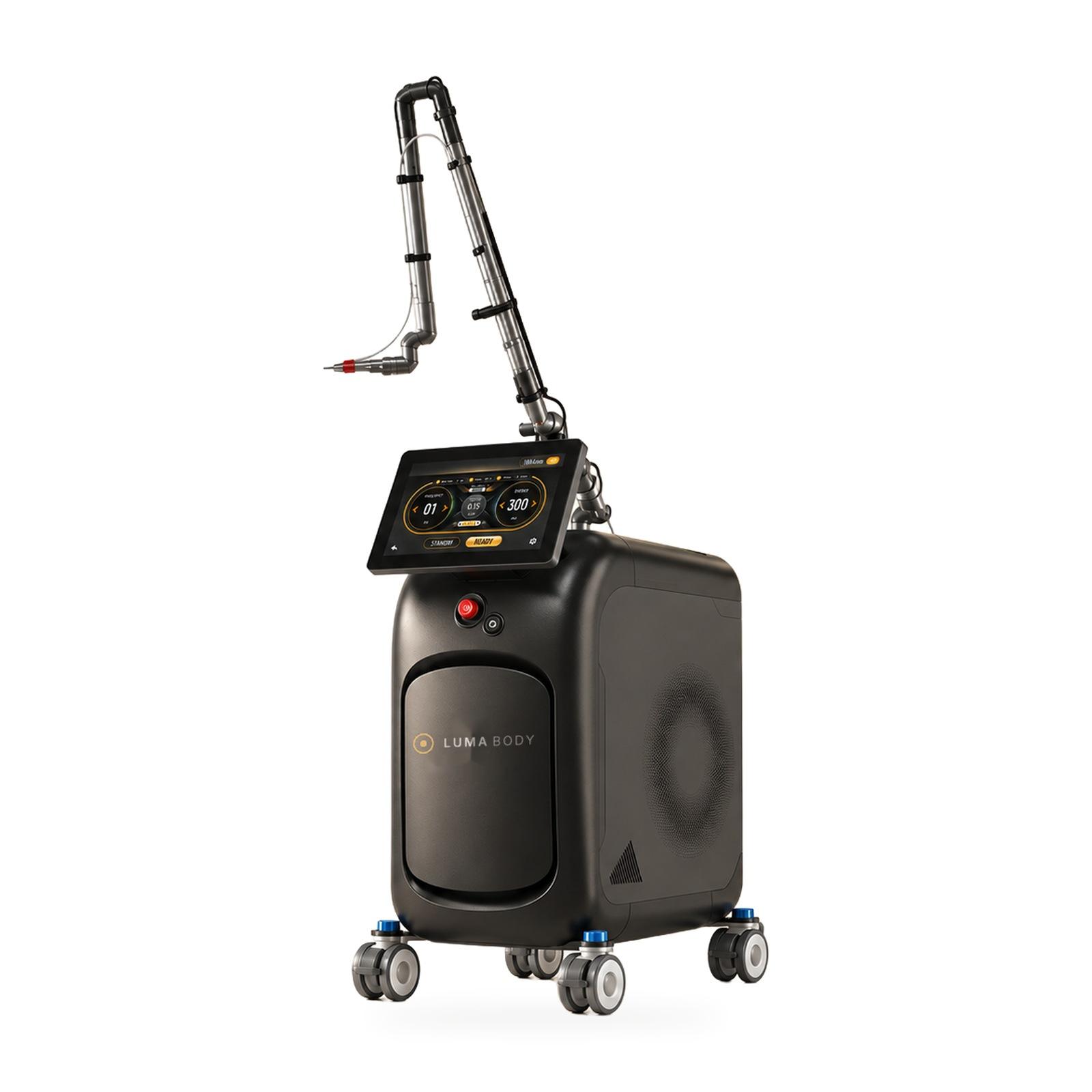
A picosecond laser is the most expensive single-purpose machine most clinics will buy, and the category where the word on the label and the machine in the box most often disagree. This guide covers what one costs, the specification that decides whether it is picosecond at all, and what it earns.
What it costs
| Class | Typical delivered price |
|---|---|
| Direct-import picosecond, 1064/532nm | $20,000–$40,000 |
| Branded picosecond systems | $100,000–$150,000+ |
| "Pico" handpiece on a multi-function console | Varies, often with no pulse width published |
The LumaPico Elite is $26,010 delivered, final price, nothing to pay on arrival. It publishes 500 ps at 1064nm and 350 ps at 532nm, up to 500 mJ per pulse, and a zoom handpiece from 2 to 10mm.
What separates a $30,000 machine from a $130,000 one is mostly not the light. It is the brand, the service contract, and the size of the sales organisation behind it. Pulse width, energy and spot sizes are what decide the treatment, and those you can compare line by line.
The specification that decides everything
Pulse width, in picoseconds, per wavelength. That one line is the difference between a picosecond laser and a Q-switched Nd:YAG sold under the same name.
- A picosecond laser: hundreds of picoseconds (for example 300–750 ps).
- A Q-switched laser: nanoseconds, roughly 5–20 ns, which is 5,000–20,000 ps.
Both remove tattoos. The shorter pulse breaks ink into finer particles, which is why picosecond machines tend to clear tattoos in fewer sessions and handle blue and green inks better. That advantage is the whole reason for the price gap, so a machine without a published picosecond figure should be priced as Q-switched. The difference is explained in more detail in picosecond vs Q-switched.
Then check, in this order:
- Peak energy per pulse at each wavelength. Large, dense tattoos need it.
- Spot sizes. A zoom handpiece covers small and large work without swaps.
- Energy stability (a percentage). Lower means more predictable sessions.
- What the warranty covers. Machine and handpiece are often different terms.
Running costs
A picosecond laser has no consumable tip and no lamp, so the cost per session is close to zero beyond electricity, eye protection and aftercare. The real running cost is downtime: a machine waiting for a part is a room earning nothing. Ask how parts are supplied and how long they take before you buy.
What it earns
Tattoo removal is priced by size and sold in courses:
| Tattoo size | Typical US price per session |
|---|---|
| Small (palm-size or less) | $100–$200 |
| Medium | $200–$350 |
| Large (half sleeve and up) | $350–$500+ |
At an average of $200 per session and eight sessions a week, a machine at the Elite's price is covered in roughly four to five months. The payback calculator on the machine page does this sum with your own numbers. For the full tattoo-removal business case, read what a tattoo removal machine costs and earns.
Who should buy one
- Tattoo removal is a service you advertise: picosecond. The session count is what clients compare between clinics.
- Pigment, melasma and skin tone are your main work: picosecond at 1064nm low-fluence, alongside a 1927nm resurfacing laser if you also sell resurfacing.
- Occasional removals only: a cheaper Q-switched machine is enough. Spend the difference on a machine you will book every day.
Before you sign anything, read the clinic laser machine buying checklist.