A carbon laser peel is the easiest treatment to add to a clinic that already owns an Nd:YAG or pico laser. It takes about 25 minutes, leaves no downtime, costs a few dollars in lotion, and sells at facial prices. For a clinic that does not own one yet, it is a good reason to choose a platform that includes the right tip.
How it works
The skin is cleansed and a thin layer of carbon lotion is applied and left to dry into the pores. The laser then passes over the face. Carbon absorbs the laser energy strongly, so it heats and breaks apart, taking dead skin and pore debris with it, while the heat gently warms the dermis beneath. Clients hear a light crackle and feel warmth, not pain.
What clients notice: smaller-looking pores, less oil, a more even tone and a brighter finish straight after the treatment. Over a course of three to six sessions a few weeks apart, the effect on oily, congested skin builds.
What it does not do: remove deep pigment, scars or lines. Those need a 1927nm or CO2 resurfacing laser or RF microneedling. Positioning carbon peel honestly, as a skin-clearing facial with a laser, keeps clients coming back for the course.
The machine it needs
A carbon peel needs a Q-switched or pico Nd:YAG handpiece with a carbon peel tip, labelled 1320nm on most combination machines. That same handpiece carries the 1064nm and 532nm tips used for tattoo and pigment work, so carbon peel arrives as an extra service on a laser you would buy anyway.
Ours that include the carbon peel tip, with current delivered prices:
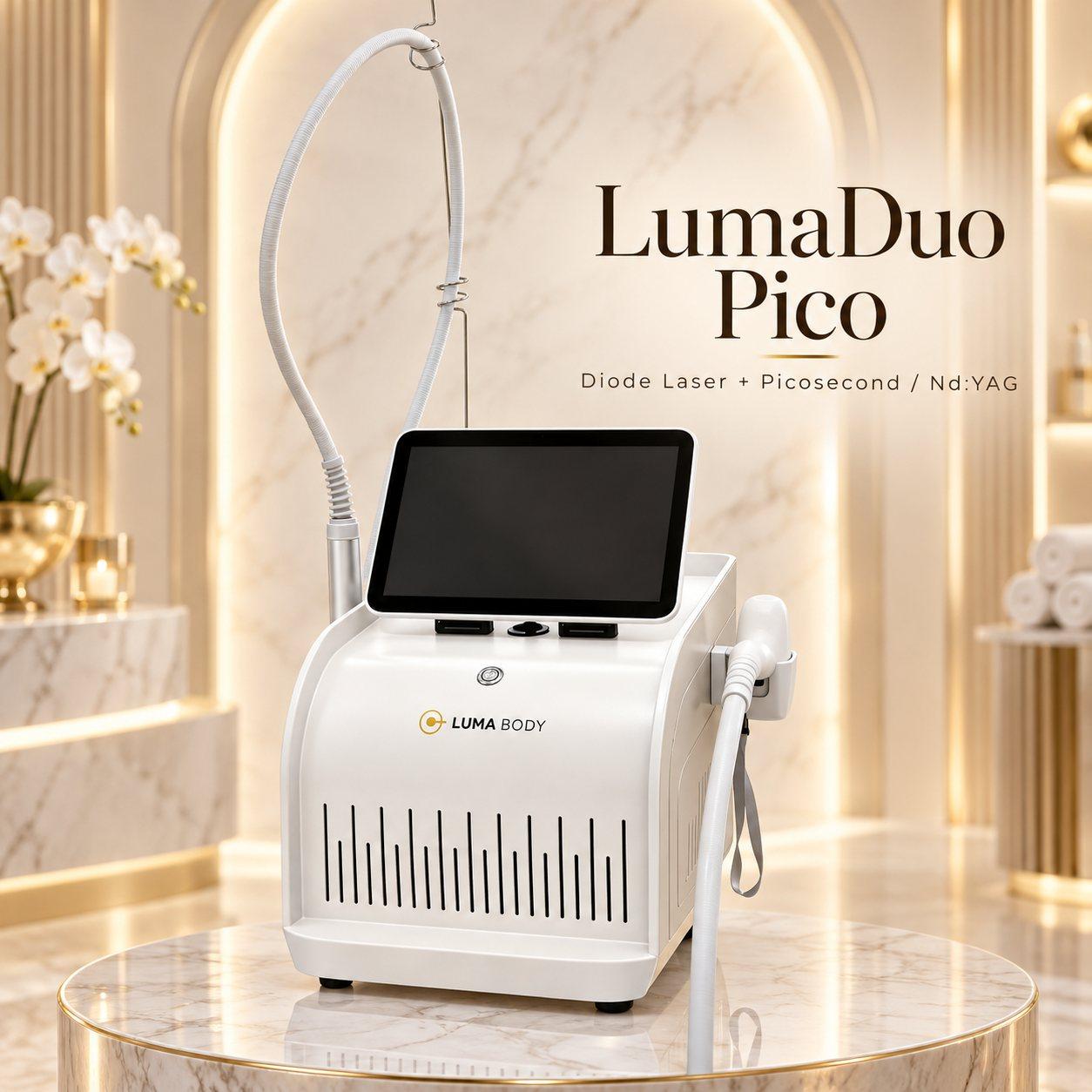
- LumaDuo Pico, diode hair removal plus a five-tip Pico Nd:YAG in a tabletop unit — $10,900
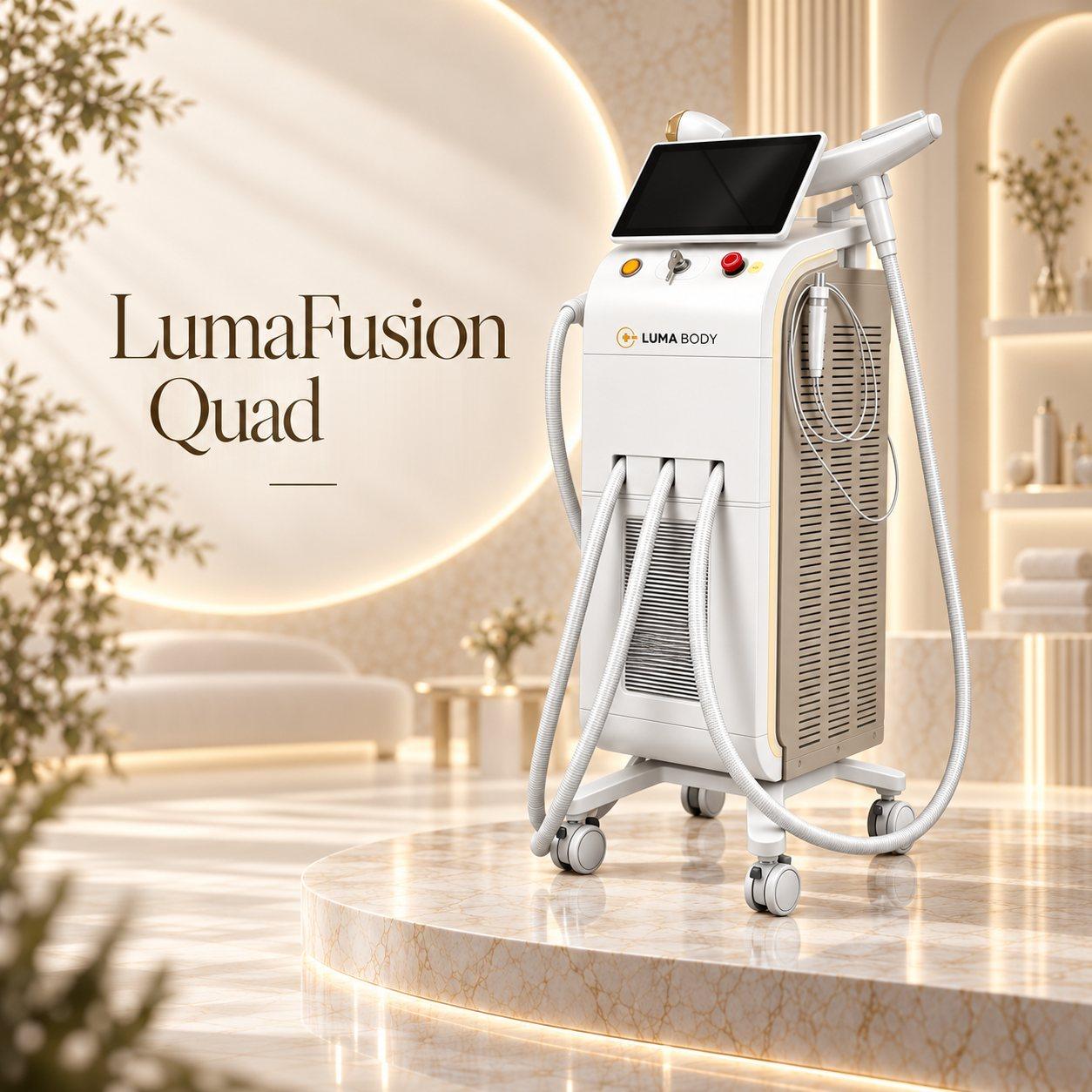
- LumaFusion Quad, diode, IPL, Nd:YAG and RF on one console — $13,900
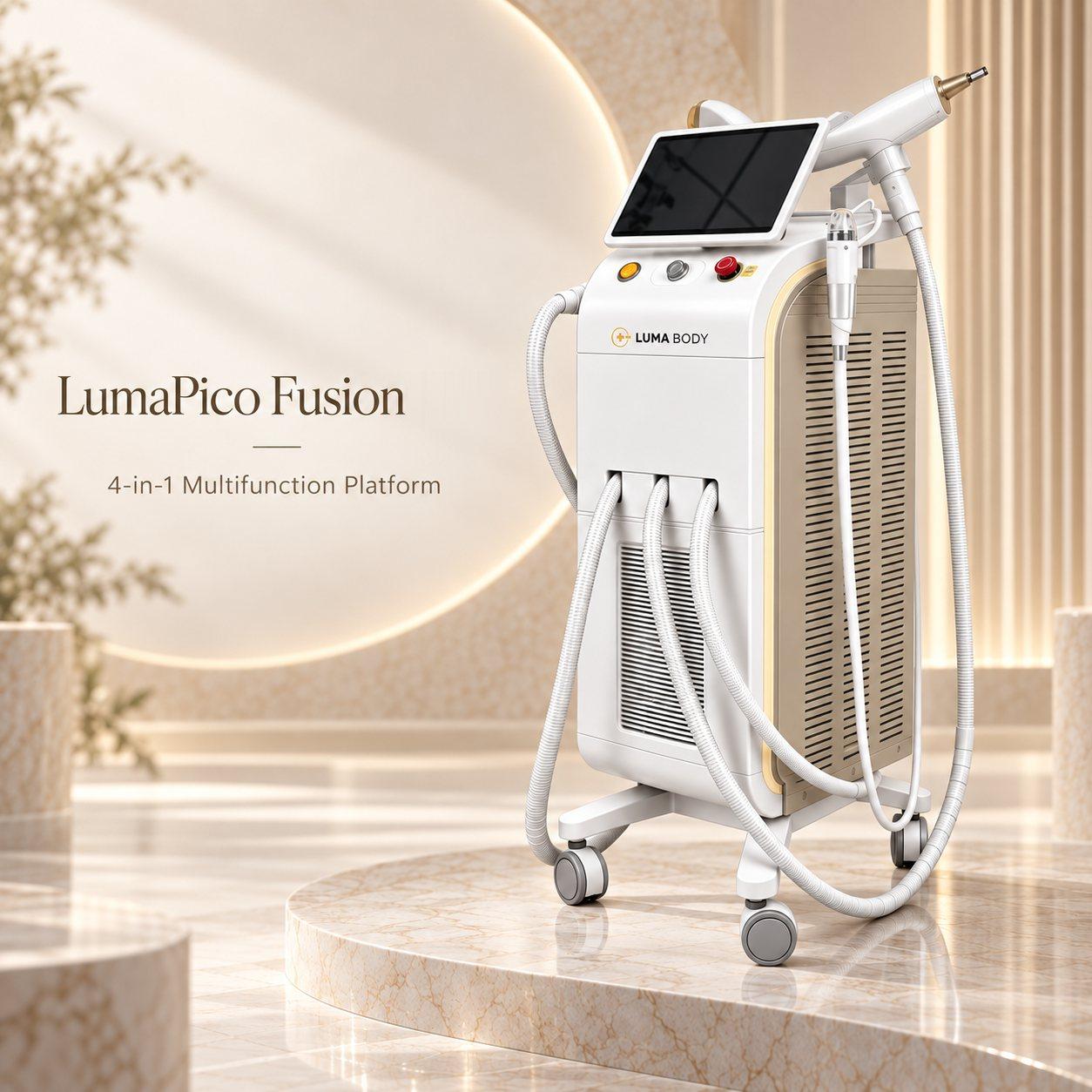
- LumaPico Fusion, diode, IPL, Pico Nd:YAG and RF microneedling — $17,900
Each is a final delivered price in the US and Canada, with nothing to pay on arrival.
What to check on the Nd:YAG handpiece
- A dedicated carbon tip. Without it, operators improvise with the 1064nm tip and an unsuitable spot, which slows the treatment.
- Adjustable spot size. A spot that opens up to 8 or 9mm covers a face in a few passes; a fixed small spot makes a 25-minute treatment a 45-minute one.
- Repetition rate. Up to 10 Hz is the working range for a smooth, fast pass.
- Pulse energy. Enough headroom that the carbon pass runs at a comfortable mid setting rather than at the top of the dial.
- The other tips. 1064nm and 532nm for dark and red ink and pigment are what make the handpiece earn on days the clinic has no peels booked.
What it earns
Carbon peel is priced like a premium facial, typically $150 to $400 a session in the US, and sold as a course. The cost to the clinic is the carbon lotion and 20 to 30 minutes of an operator's time.
As a worked example, a clinic charging $180 a session that books six peels a week takes in more than $56,000 a year from a single treatment that came free with the laser. That is before the tattoo removal, pigment and hair removal the same machine sells.
The treatment also fits well into packages. It works as a monthly maintenance facial for clients on a hair removal course, and it sits naturally alongside hydra dermabrasion for oily and congested skin.
Where it fits in a buying decision
If carbon peel is the only laser treatment you plan to offer, buy a simpler machine. If the clinic will also sell hair removal and tattoo or pigment work, a combination platform with a five-tip Nd:YAG handpiece covers all three, and carbon peel turns that handpiece's quiet days into revenue. The multifunction laser buying guide explains which combination fits which clinic, and picosecond or Q-switched covers the tattoo side of the decision.