A clinic that can only treat light skin turns away a large share of the people who want laser hair removal. Clients with Fitzpatrick IV to VI skin are often the ones who have been told "no" elsewhere, and they stay loyal to the clinic that treats them safely. Whether you can be that clinic is decided mostly by the machine you buy.
Why darker skin is different
Laser hair removal works because melanin in the hair absorbs the laser's energy and heats the follicle. The skin's surface also contains melanin, and in darker skin it contains much more. A wavelength that melanin absorbs strongly heats the epidermis along with the hair, and that is where burns, blisters and pigment changes come from.
The fix is to choose wavelengths and settings that favour the follicle over the skin around it.
What the machine has to have
1. A 1064nm wavelength. The longest wavelength in common use is absorbed least by epidermal melanin and penetrates deepest. It is the working wavelength for Fitzpatrick V and VI. A machine without it should not be sold as treating all skin types.
2. More than one wavelength. 755nm is excellent for light skin and fine hair, 808nm is the all-rounder, and 1064nm is for dark skin. A handpiece that combines them lets the operator weight the treatment to each client instead of running one compromise setting for everyone.
3. Long pulse widths. A longer pulse lets the thinner epidermis cool while the thicker follicle keeps heating. Look for a pulse range reaching 100ms or more.
4. Real contact cooling. A sapphire or chilled tip held at around 5°C protects the skin's surface throughout the pass. On darker skin this is not a comfort feature; it is part of what makes the treatment safe.
5. In-motion (SHR) mode. Building heat gradually with many low-energy pulses, rather than one high-energy pulse, is gentler on darker skin and still effective.
6. Enough peak power. Conservative settings mean lower fluence per pulse. A machine with high peak power and a high repetition rate still treats efficiently at those settings; a weak machine becomes slow and less effective.
Ours, and how they compare for darker skin
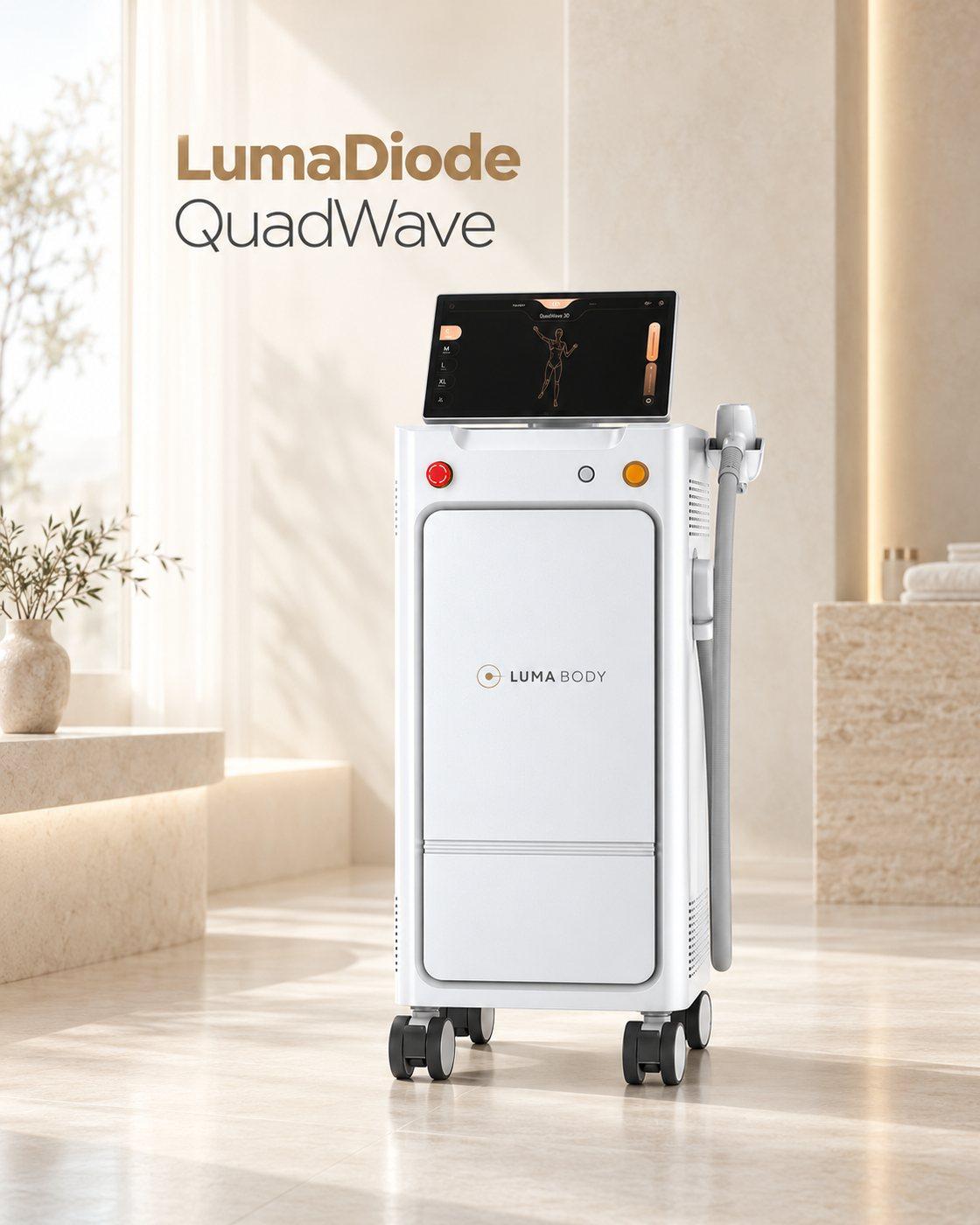
- LumaDiode QuadWave: 755, 808, 940 and 1064nm in one handpiece, 1800W, contact cooling at 5°C, pulse widths to 125ms — $17,900. Built for a clinic that treats every skin type at volume.
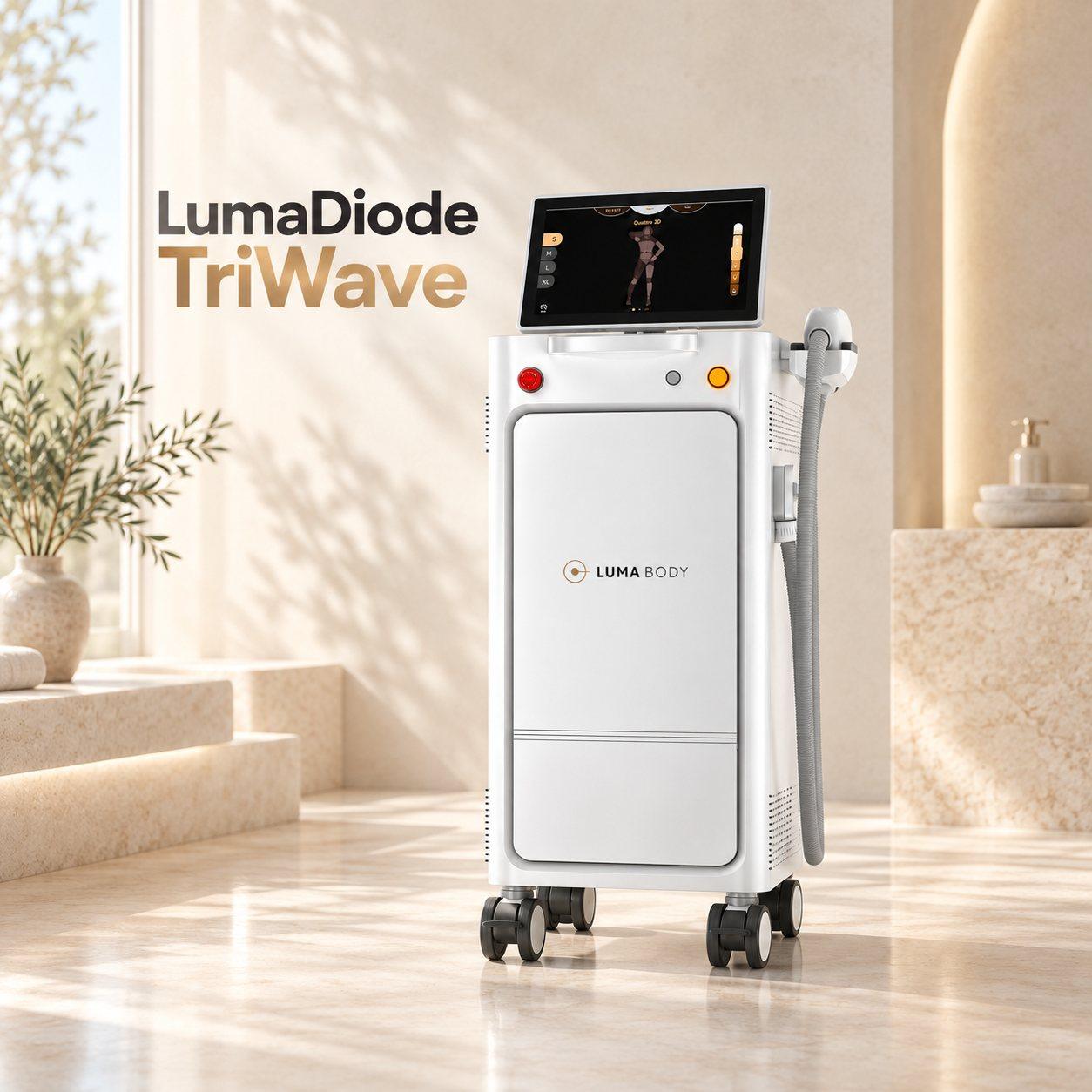
- LumaDiode TriWave: 755, 808 and 1064nm, 1200W, SHR in-motion mode — $12,900. The smaller room footprint for the same skin-type range.
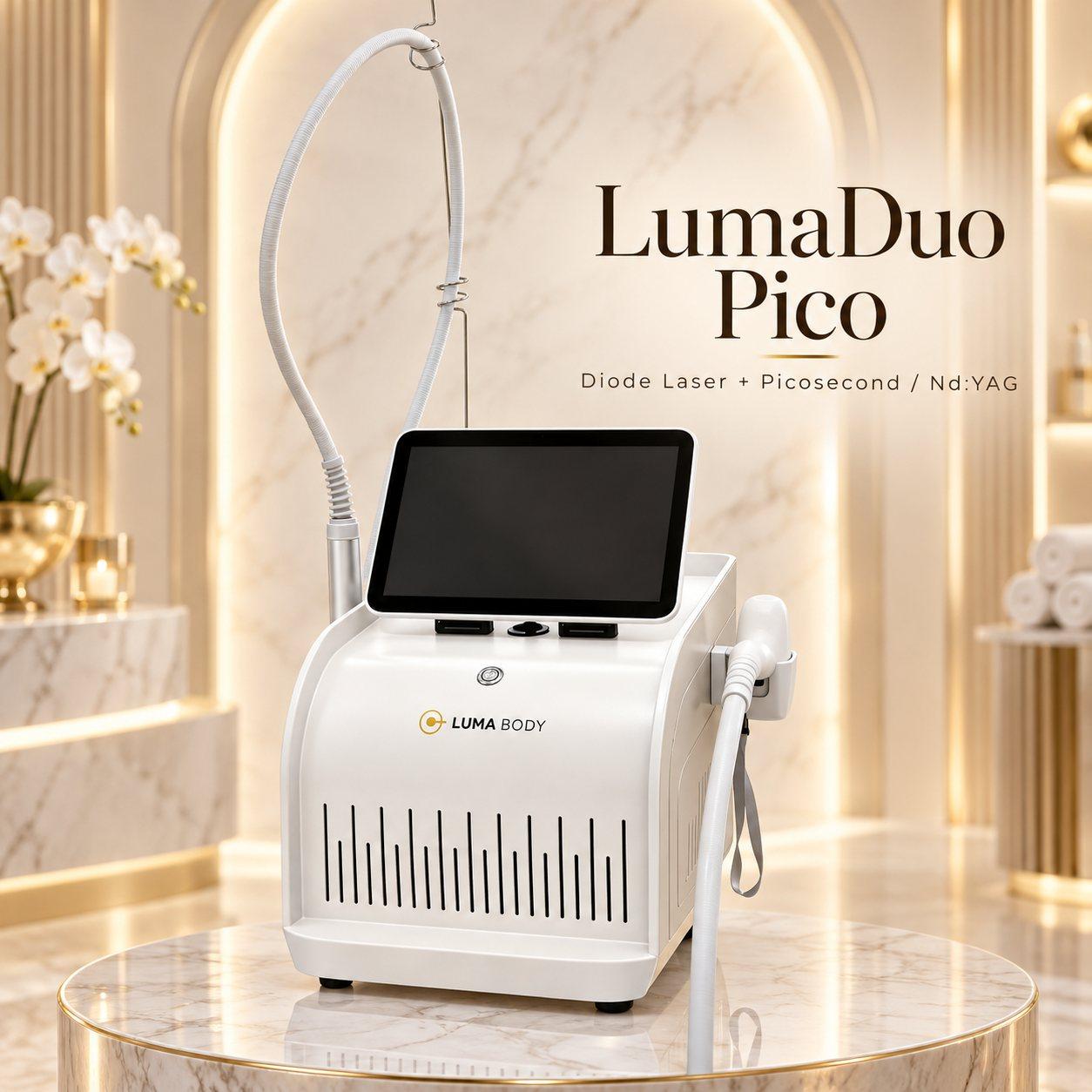
- LumaDuo Pico: a four-wavelength diode including 1064nm, plus a Pico Nd:YAG for tattoo and pigment work — $10,900.
All three are final delivered prices in the US and Canada, with nothing to pay on arrival. The single-808nm configurations cost less, but for a clinic that wants to treat darker skin, the multi-wavelength handpiece with 1064nm is the one to buy.
Why not IPL
IPL emits a broad band of light, including the shorter wavelengths that melanin absorbs most. Filters narrow it, but IPL remains a poor tool for Fitzpatrick V and VI hair removal. It is very good at photo-rejuvenation, redness and pigment on lighter skin, and many clinics own both. For hair removal across every skin type, the diode is the machine. The diode laser vs IPL comparison goes through the difference in detail.
How the treatment changes in practice
- Consultation and skin typing for every new client, recorded on the file.
- A test patch at the planned settings, checked after 24 to 48 hours.
- Conservative first session, increased only as the skin tolerates it.
- No recent tan. Sun exposure raises the skin's melanin and the risk with it, whatever the client's baseline skin type.
- A few more sessions. Clients with darker skin typically need eight to ten sessions rather than six to eight. Price the package accordingly.
Training matters as much as hardware. Every machine we sell includes online operator training and printable parameter cards. Go through the darker-skin settings in that training before the first Fitzpatrick V or VI client is booked.
For the wider choice between diode machines, read choosing the best diode laser for a med spa, and for the numbers, how fast a diode laser pays for itself.