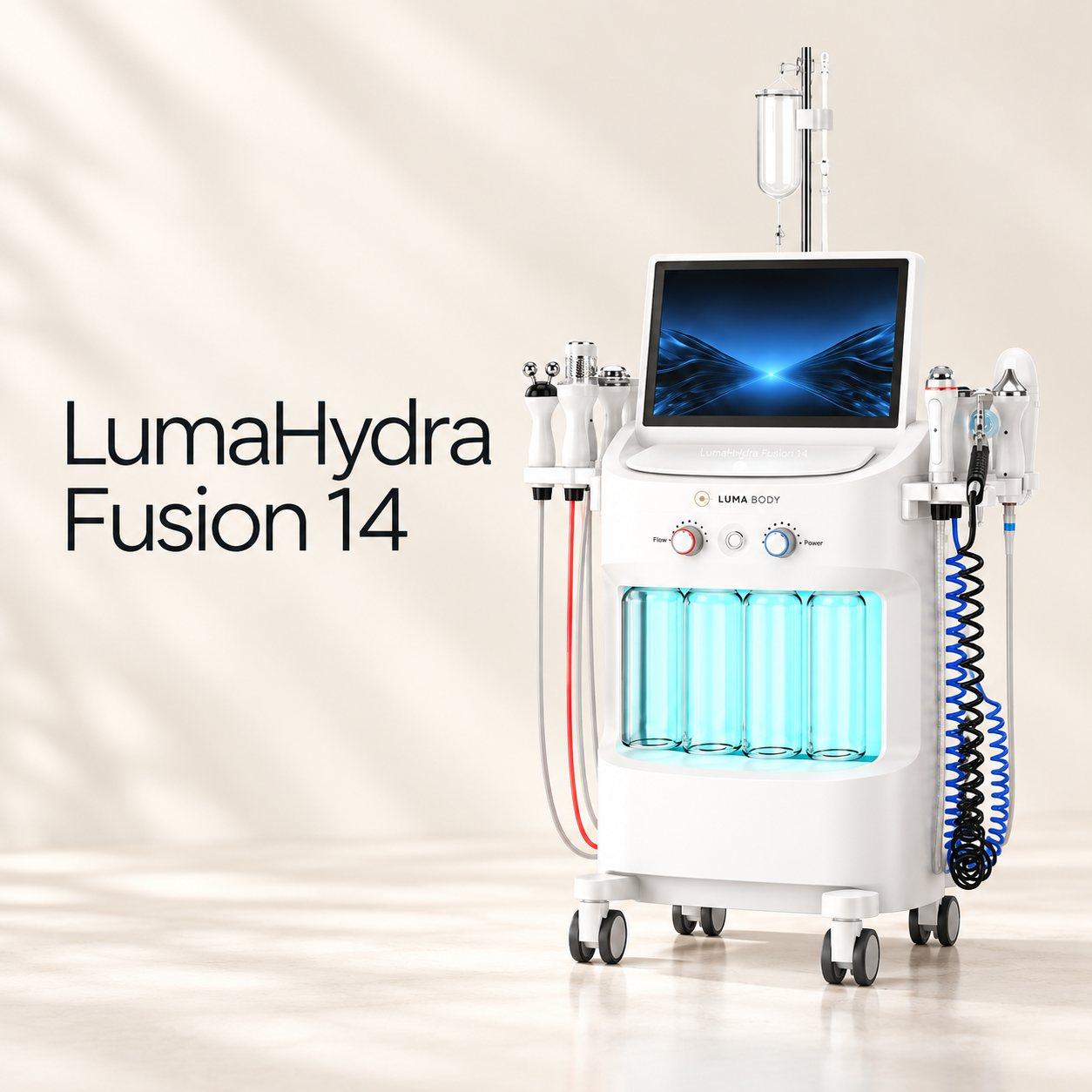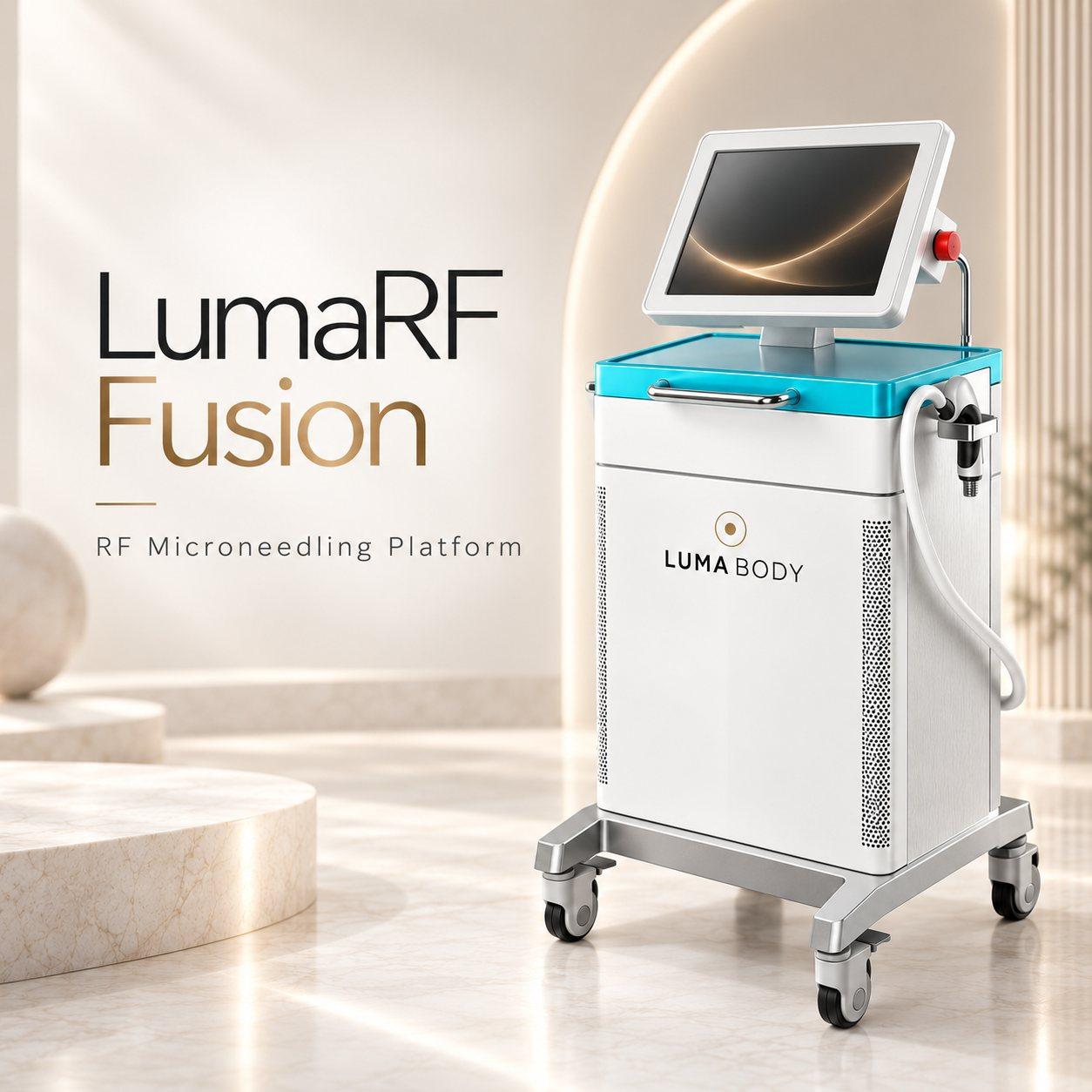
Mesotherapy and skin booster treatments are a growing part of the facial menu in medical spas. Most clinics start by injecting by hand. The motorised injector, often called a meso gun, is what turns the treatment from a skilled but slow procedure into one a clinic can deliver the same way every time and schedule like any other service.
What they cost
| Type | Typical delivered price |
|---|---|
| Handheld injector gun, basic | $1,500–$3,000 |
| Console system, depth control, multi-needle | $6,000–$10,000 |
| Branded clinic systems | Often more |
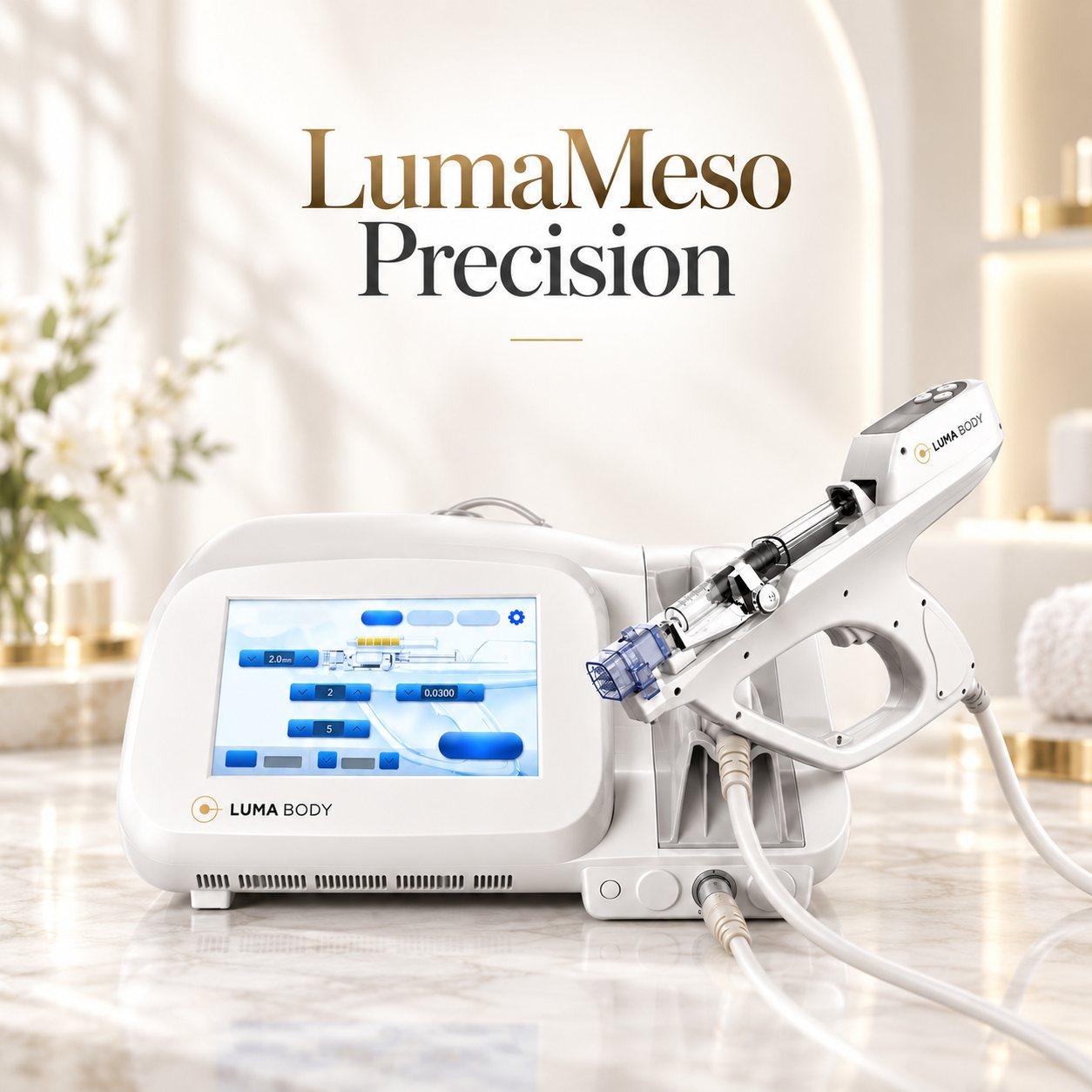
Ours: LumaMeso Precision, depth to 4mm in 0.2mm steps, a 9-pin 32G array, three dosing modes and vacuum assistance — $7,900, delivered, with nothing to pay on arrival in the US and Canada. A version without the vacuum module costs less.
What a motorised injector changes
Depth. By hand, depth depends on the injector's angle and pressure, and it drifts over hundreds of points. A machine set to 1.0mm injects at 1.0mm on the first point and the four-hundredth. Fine steps, 0.2mm on ours, let you set different depths for forehead, cheek and neck.
Dose. The machine meters the volume per shot instead of the operator judging it by thumb pressure. Product goes where it is meant to, and expensive product is not wasted.
Speed. A 9-pin cartridge places nine points per trigger. A full face takes minutes rather than most of an appointment.
Comfort. Fine 32G needles and a fast, consistent stroke are more comfortable than repeated hand injection, which matters for a treatment clients are meant to repeat.
The three modes you will use
- Dose mode: a set volume per trigger, for precise point work.
- Continuous mode: steady injection as the operator moves, for larger areas such as neck and décolletage.
- Auto mode: the machine sequences the injections at a fixed rhythm, which is fastest over a full face or scalp.
What to check before buying
- Depth range and step size. A range up to 4mm with fine steps covers superficial skin booster work and deeper scalp protocols.
- Needle options. A multi-pin array for speed, and a single-needle option for precise points. Check that cartridges are sterile, single-use and easy to reorder.
- Syringe compatibility. Support for the 1, 2, 3 and 5ml syringes your products come in.
- Vacuum assistance. Worth paying for if you treat mature or thin skin, where depth is hardest to hold.
- Voltage. A universal power supply (90–264V) works in any treatment room in North America.
Who can perform it
In the US and Canada, injecting anything into the skin is a medical procedure. Who may perform it, and under what supervision, is set by each state or province, and typically means a physician, nurse practitioner, physician assistant or registered nurse working under medical oversight. The same rules govern which products may be injected. Check with your state board or provincial college before you add mesotherapy to the menu. The machine makes the treatment consistent; it does not change who can do it.
How it pays back
Clinics typically charge $250 to $600 per mesotherapy or skin booster session in the US, with most of the variation coming from the product used. Per session, the clinic pays for one needle cartridge and the product. As a worked example, a clinic that clears $150 per session after product and cartridge covers an $8,000 machine in about 55 sessions, roughly six months at two sessions a week. Courses of three to four sessions with maintenance visits make that faster.
Mesotherapy sells best alongside other skin quality treatments. It follows naturally after hydra dermabrasion, and it complements RF microneedling, which works on texture and firmness while mesotherapy works on hydration and glow.