RF microneedling is the treatment most med-spas add after hair removal, and the equipment market for it is unusually stratified.
The range
$1,500–$8,000. Factory-direct and OEM systems. Real machines, often with the same needle cartridges the expensive ones use.
$9,000–$15,000. Distributor-sold professional systems with training, support and documentation.
$25,000–$55,000. Branded platforms. The premium is brand recognition and a clinical evidence base, both of which have genuine commercial value if your clients arrive asking for a device by name.
That last point is worth being honest about: a client who walks in asking for a branded treatment is asking for the brand. No unbranded machine, however good the specification, sells that appointment.
Insulated versus non-insulated
This is the specification that decides what a machine can treat.
Non-insulated needles conduct RF along their whole length, heating the full needle tract from the surface down. Simpler, and effective on thicker skin.
Insulated needles emit only from the exposed tip. Energy lands at the set depth and the shaft above it is spared. That is what makes treating thin skin — periorbital, neck — possible without heating the epidermis on the way in.
A machine with both covers more of a treatment menu than a machine with either. Ask which a quote includes before comparing prices.
Depth range and pulse duration
Needle depth from around 0.2mm to 7.0mm spans everything from fine periorbital work to thick submental tissue. A machine limited to 3mm cannot do the deeper half of that list.
Pulse duration matters for the same reason: 10ms and 900ms are different treatments with the same needle. A wide adjustable range is what lets one platform serve several protocols rather than one.
Cartridges are the ongoing cost
Needle cartridges are single-use. Before buying, get the cartridge price and which pin counts are included. A machine that only takes proprietary cartridges at a high price will cost more over two years than a cheaper machine on the sticker.
What we charge
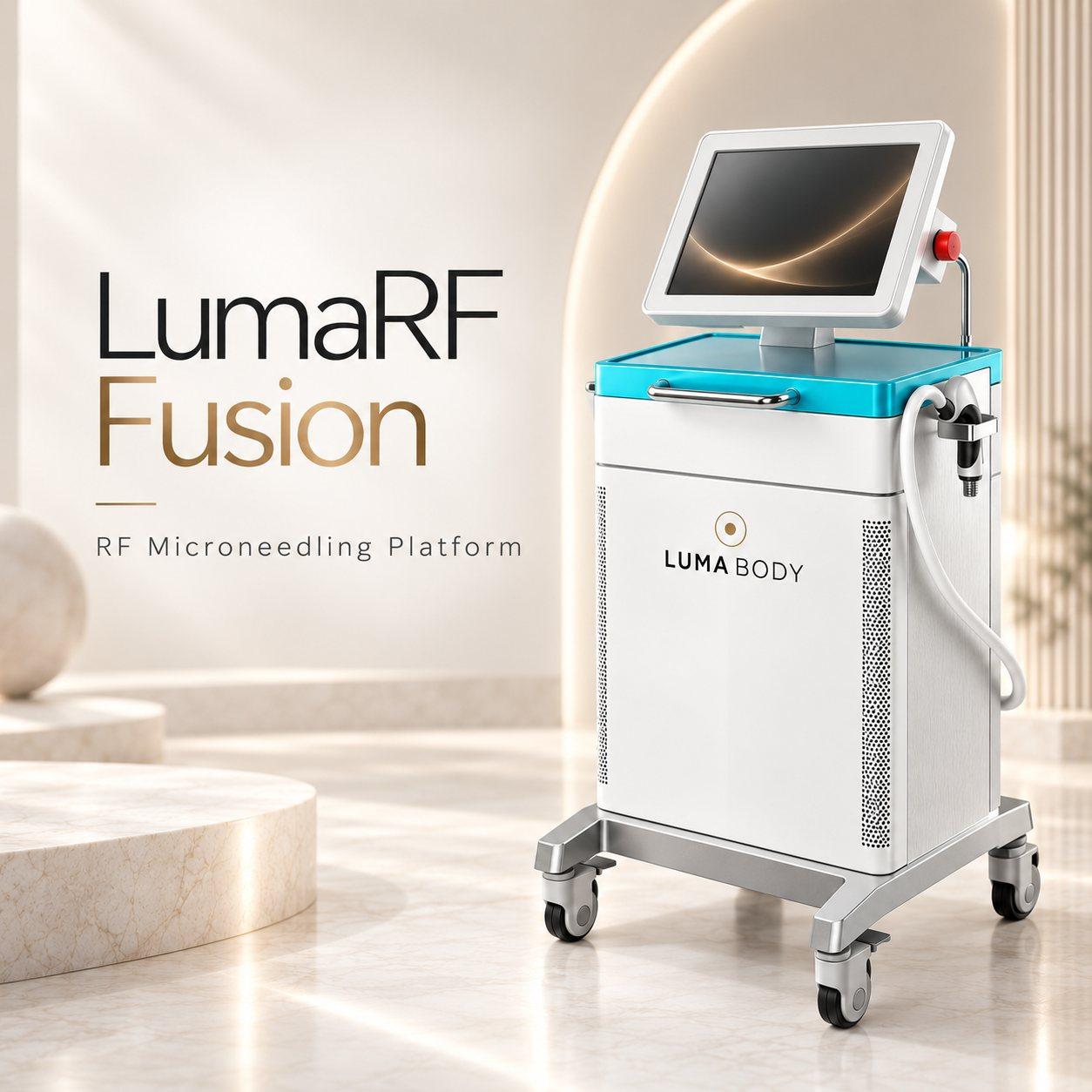
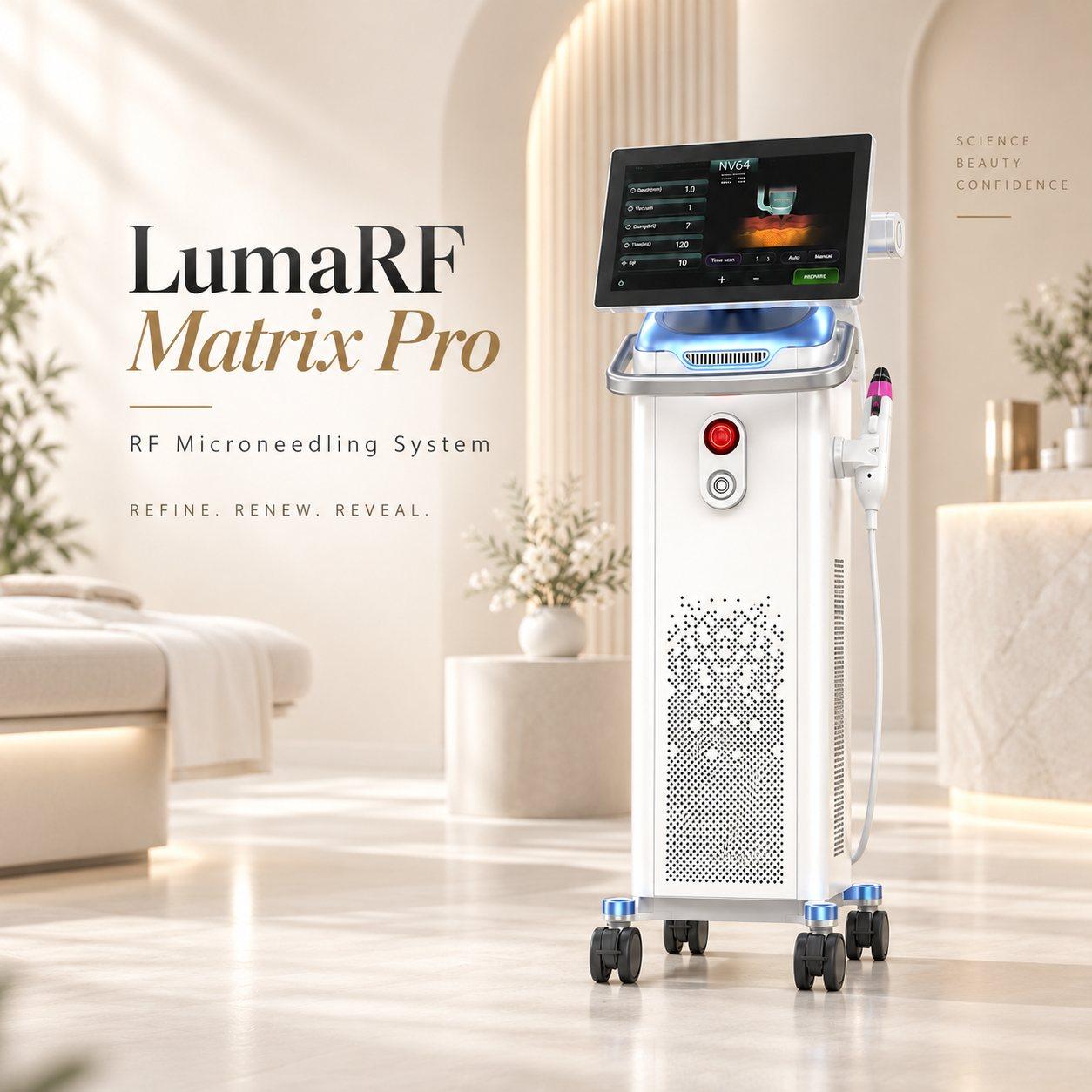
Two systems, both priced openly: the LumaRF Matrix Pro at 175W with insulated, non-insulated, micro-needle and thermal heads and depth to 7.0mm, and the LumaRF Fusion, which pairs microneedle and superficial fractional RF with a 650nm PDT head and a −5°C cryo handpiece on one trolley.