The short answer
A fourth wavelength is worth paying for if a real share of your clients have darker skin and dark hair that is not coarse. In that case the 940nm setting gives the operator a middle option between 808nm and 1064nm.
If most of your clients are Fitzpatrick I to IV, the three-wavelength machine covers the work. What separates these two machines more than the 940nm is power, spot size, repetition rate and cooling. Those decide how fast the room turns over.
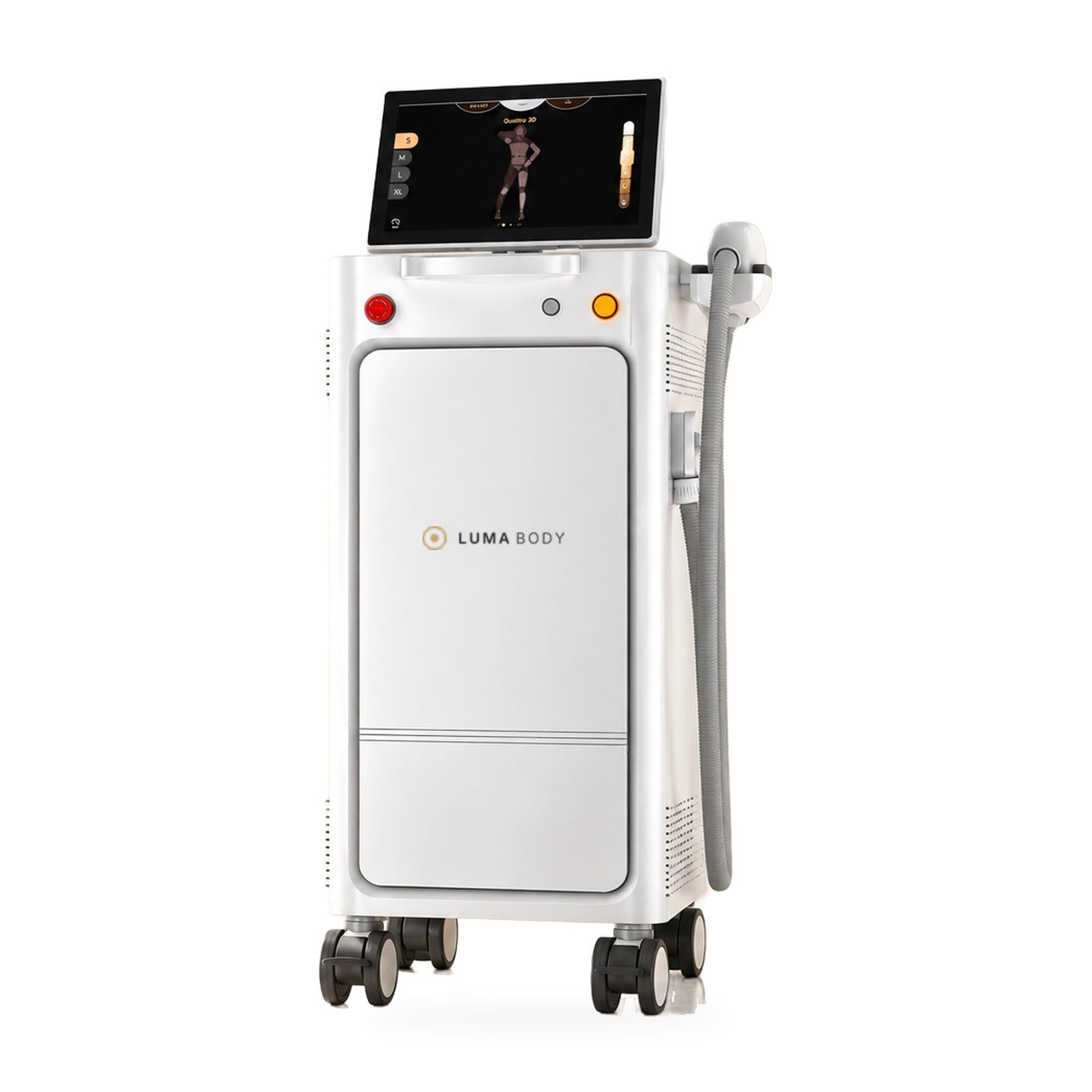
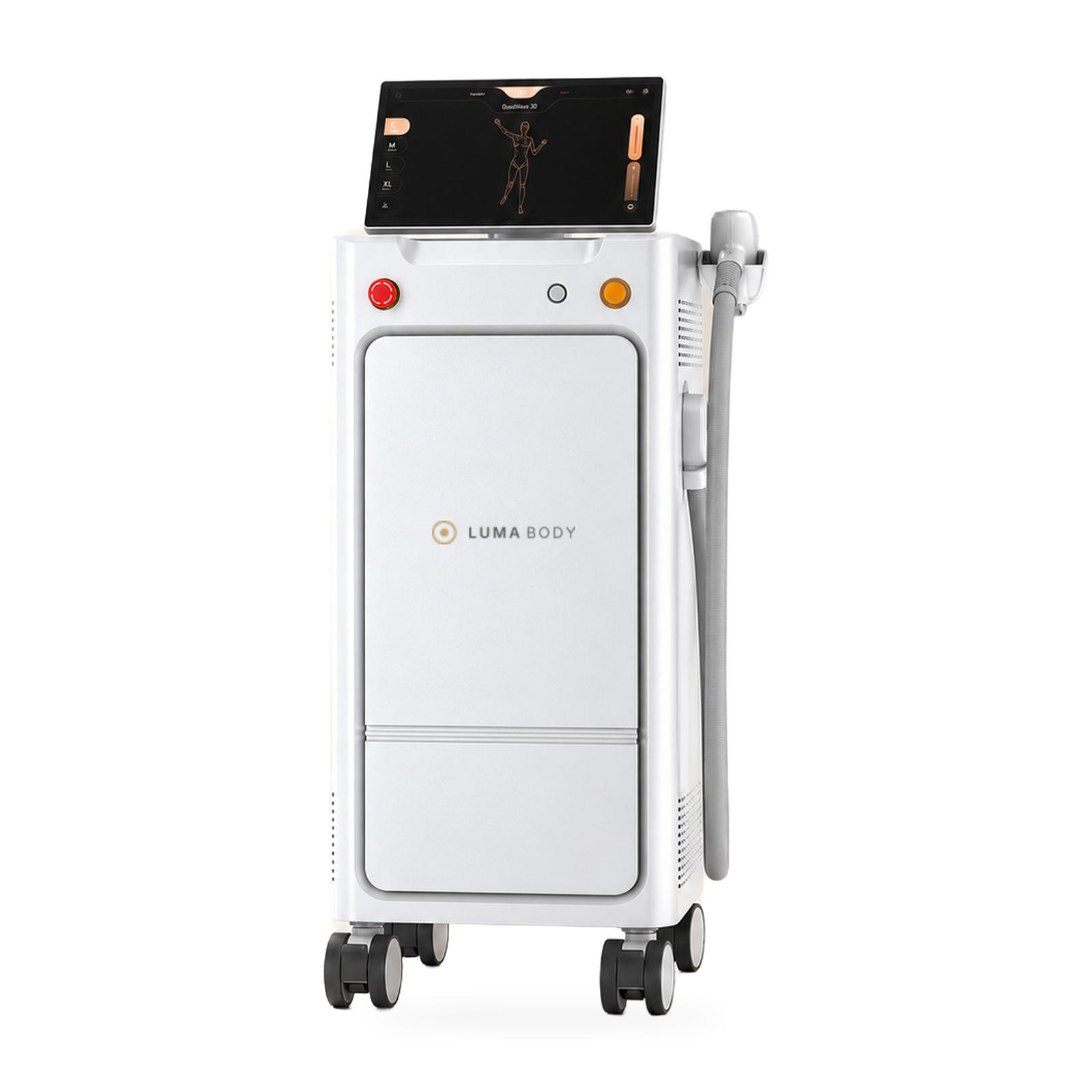
| LumaDiode TriWave | LumaDiode QuadWave | |
|---|---|---|
| Wavelengths | 755 + 808 + 1064nm | 755 + 808 + 940 + 1064nm |
| Laser power | 1200 W | 1800 W |
| Machine power | 2800 W | 4000 W |
| Spot sizes | 10x20mm | 12x12, 12x24, 12x36mm, 6mm round |
| Repetition rate | Up to 10 Hz | Up to 20 Hz |
| Fluence | 5–40 J/cm² | 5–40 / 5–30 J/cm² |
| Pulse width | 5–100 ms | 10–125 ms |
| Cooling | TEC-cooled sapphire tip | Chiltip contact, 5°C |
| Modes | HR / SHR / SHR STACK | HR / STACK, with presets |
| Console | 15.6" touchscreen | 15.6" Android touchscreen |
| Warranty | 12 months machine, 3 months handpiece | 12 months machine, 3 months handpiece |
| Final delivered price | $10,320 | $15,920 |
Both prices are delivered, with nothing to pay on arrival in the US and Canada. Both machines can also be ordered as a single-808nm unit. If the wavelengths are the reason you are buying, check that your order is the multi-wavelength version.
What 940nm actually adds
Each wavelength in a diode handpiece is a trade between two things. The first is how strongly melanin absorbs the light, which heats the hair. The second is how deep the light reaches before it is spent.
- 755nm: strongest melanin absorption, shallowest. Best suited to fine and light-brown hair on lighter skin.
- 808nm: the workhorse. Good absorption and good depth, and it does most of a treatment plan.
- 940nm: less melanin absorption than 808nm, more than 1064nm. It also has noticeably more water absorption than either neighbour, which adds some bulk heating around the follicle.
- 1064nm: least melanin absorption and deepest. It is the safest margin for the epidermis on dark skin, but it is weaker on finer hair.
On paper, 940nm fills a gap. On darker skin, an operator often runs 808nm conservatively and leans on 1064nm. For hair that is dark but not thick, 1064nm alone can be underpowered. The 940nm sits in the middle.
The size of that gap is modest. It is a refinement, not a different class of machine. The question to ask before you buy is how the wavelengths fire:
- Can the operator choose each one alone?
- If they fire as a mix, what is the ratio?
- Can the ratio be changed?
A fourth wavelength you cannot weight is worth less than one you can.
Which clients it matters for
| Client mix | Does 940nm matter? |
|---|---|
| Mostly Fitzpatrick I–III, dark hair | Little. 755 and 808nm do the work. |
| Mixed I–IV | Some. Useful, but not decisive. |
| Many IV–VI, coarse dark hair | Some. 1064nm already handles most of it. |
| Many IV–VI, medium or finer dark hair | Most. This is where the middle wavelength earns its place. |
| White, grey, red or very fair hair | No. No diode wavelength reliably targets hair without pigment. |
If darker skin is a large part of your book, read what a machine needs for laser hair removal on darker skin. Cooling and pulse width matter there as much as wavelength.
1800W vs 1200W: divide by the spot
Rated laser power on its own tells you little. What reaches the skin depends on the area the power is spread over.
The table below uses rated power and assumes all of it reaches the skin. In practice it does not, so read the figures as a comparison between machines rather than real delivered values.
| Spot | Area | Rated power per cm² | Pulse length for 20 J/cm² | Pulses to cover 1,000 cm² once |
|---|---|---|---|---|
| TriWave 10x20mm | 2.0 cm² | 600 W | ~33 ms | 500 |
| QuadWave 12x12mm | 1.44 cm² | 1,250 W | ~16 ms | 695 |
| QuadWave 12x24mm | 2.88 cm² | 625 W | ~32 ms | 348 |
| QuadWave 12x36mm | 4.32 cm² | 417 W | ~48 ms | 232 |
Two things follow from these figures:
- On its 12x24mm spot, the QuadWave matches the TriWave's power density on a 44% larger footprint. The extra 600W buys area, not intensity.
- On the 12x36mm spot, each pulse covers more than twice the TriWave's area, at lower power per square centimetre. That suits stacked, low-fluence passes on legs and backs. A pulse at 20 Hz has a 50 ms window, so around 20 J/cm² is close to the practical ceiling on the big spot at full speed.
The QuadWave lists two fluence ranges, 5–40 and 5–30 J/cm². Ask which spot each range applies to.
Repetition rate is the other half of speed. The QuadWave's 20 Hz against the TriWave's 10 Hz matters in stacked mode, where many low-energy pulses build heat as the operator keeps moving. In practice, hand speed and how well the operator overlaps passes limit throughput before either machine does.
Spot sizes
The TriWave has one 10x20mm spot. It is a sensible all-round size: workable on the face, workable on a back, and ideal for neither.
The QuadWave covers the range:
- 12x36mm for large areas
- 12x24mm for general body work
- 12x12mm for the face and bikini line
- 6mm round for small, contoured areas such as the nose and around the fingers
The QuadWave's standard package includes two spot sizes. The full set is an accessory option at extra cost. Confirm which tips are on your quote.
Cooling and pulse width
On darker skin, cooling and pulse width carry as much weight as wavelength. A longer pulse heats the follicle more gradually, which gives the epidermis more margin.
- QuadWave: pulses run to 125 ms against the TriWave's 100 ms. Contact cooling holds the tip at 5°C, and the treatment runs without gel.
- TriWave: cools its sapphire tip with a TEC system and needs no separate chiller. It fits a normal treatment room.
The power supply
This is the item buyers miss. Machine power is the rated draw at the wall, and it is much higher than the laser power.
At 120V:
- TriWave: 2,800W works out to about 23 amps at full rated load.
- QuadWave: 4,000W works out to about 33 amps.
Both figures are above what a standard 15 or 20 amp outlet supplies. Rated power is a maximum, not continuous draw. Even so, have an electrician check the circuit before delivery, not after. Both machines are available in 110V 60Hz and 220V 50Hz.
Which clinic should buy which
Buy the LumaDiode TriWave if:
- hair removal is one service among several, or you are adding your first laser
- most clients are Fitzpatrick I to IV
- one operator runs the room at moderate volume
- you want the lower purchase price and a simpler electrical install
Buy the LumaDiode QuadWave if:
- hair removal is the core of the business, with full legs, backs and chests booked daily
- a meaningful share of clients have darker skin with medium or fine dark hair
- you want a small tip for detail work and a large one for body work on the same machine
- more than one operator will run the machine through a full day
If the three-wavelength spec suits you but the format does not, the LumaDiode Vertex is a vertical 1200W triple-wavelength unit. The LumaDiode Compact is a portable one.
Before you order
- Ask whether each wavelength can fire alone or only as a fixed mix, and at what ratio.
- Get the spot sizes in writing, and which fluence range applies to each spot.
- Have the circuit checked for the machine's rated power.
- Confirm handpiece warranty terms. Both machines carry 3 months on handpieces against 12 on the machine.
- Confirm what applies where you practise for who may operate a hair removal laser.
For the price gap in revenue terms, the arithmetic is in how fast a diode laser hair removal machine pays for itself. For the wider field, see choosing a diode laser for a med spa and eleven things to check before buying any med-spa machine.