Buying a clinic machine online can be safe. Most of the risk comes down to a few things you can check before any money moves: who the seller is, what the paperwork says, where the money goes, and what happens if a handpiece fails in month three.
You do not need a lawyer for any of this. You need about an hour and a willingness to ask direct questions.
Five red flags worth stopping for
| Red flag | Why it matters | What to ask |
|---|---|---|
| No published price | The price is set after the seller has sized you up, and it is hard to compare quotes | "What is the final delivered price for this exact configuration, in writing?" |
| No company details | If something goes wrong, there is no one to hold to account | "What is your company's full legal name and address?" |
| Full payment to a personal account | Money sent to an individual is hard to trace and hard to recover | "Why is the account not in the company's name?" |
| No written warranty | A fault becomes a negotiation instead of a claim | "Can you send the warranty terms before I order?" |
| No training | You end up learning a high-power device by trial and error on paying clients | "Who trains my team, how, and for how long?" |
A single flag can have an innocent explanation. A small seller may quote by email rather than publish a price. Two or more together are a reason to walk away rather than negotiate, especially if one of them is about where the money goes.
Two smaller signs are worth noting. One is pressure to pay today. The other is specifications that change from one message to the next.
What a safe purchase looks like on paper
A proforma invoice before any payment. It should name the seller's company and address, your practice, the exact model, the configuration, the voltage, the accessories, the final delivered price and the payment terms. If what arrives does not match what you ordered, this is the document you point to.
A deposit option. Paying 50% with the order instead of 100% limits what you have at risk. Ask when the balance is due and make sure the invoice says so.
Payment to a company account. The name on the bank account should match the name on the invoice. Before you send anything, confirm the bank details by phone, using a number from the seller's website rather than one in the email. Invoice redirection fraud often works by intercepting an email thread. The seller may not even know it has happened.
A written warranty with the handpieces listed separately. Handpieces do the work, so they wear, and they usually carry a shorter term than the console. Our machines come with 12 months on the machine and 3 months on handpieces. Whatever the terms, you should know them before you buy. Ask too whether consumables and spares can be ordered from the same seller.
Insured delivery to your door, with nothing to pay on arrival. Ask who carries the risk while the machine is in transit and what happens if the crate arrives damaged. Make sure the price on the invoice is the final delivered price, so no second bill turns up at the door. For what a delivered price should cover, see what DDP means. When the crate arrives, photograph it before you sign for it.
Operator training. Ask who delivers it, in what format, how long it runs, and whether staff you hire later can be trained too. Training covers how to use the machine. It does not decide who may treat clients. Confirm what applies where you practise.
Questions to ask any seller before you wire money
- What is your company's full legal name and address?
- Will you send a proforma invoice listing the model, configuration, voltage, accessories and final delivered price?
- Is a deposit option available, and exactly when is the balance due?
- Whose name is on the bank account I am paying?
- Is the warranty in writing? How long does it cover the machine, and how long the handpieces?
- When a part fails, how is the fault diagnosed, and who pays to ship the replacement?
- Which consumables and spares will I need, and can I order them from you?
- Is delivery insured, and what do I do if the machine arrives damaged?
- What training is included, how is it delivered, and can new staff join later?
- What voltage and power draw is the machine built for, and will it run on my room's supply?
- After delivery, who do I contact with a problem, and how?
A seller worth buying from will answer all eleven without hesitating. Evasive or slow answers to questions 1, 4 and 5 tell you most of what you need to know.
What this looks like on a real listing
We publish the price and full specifications for every machine, so you can check them before speaking to anyone. Two examples follow.
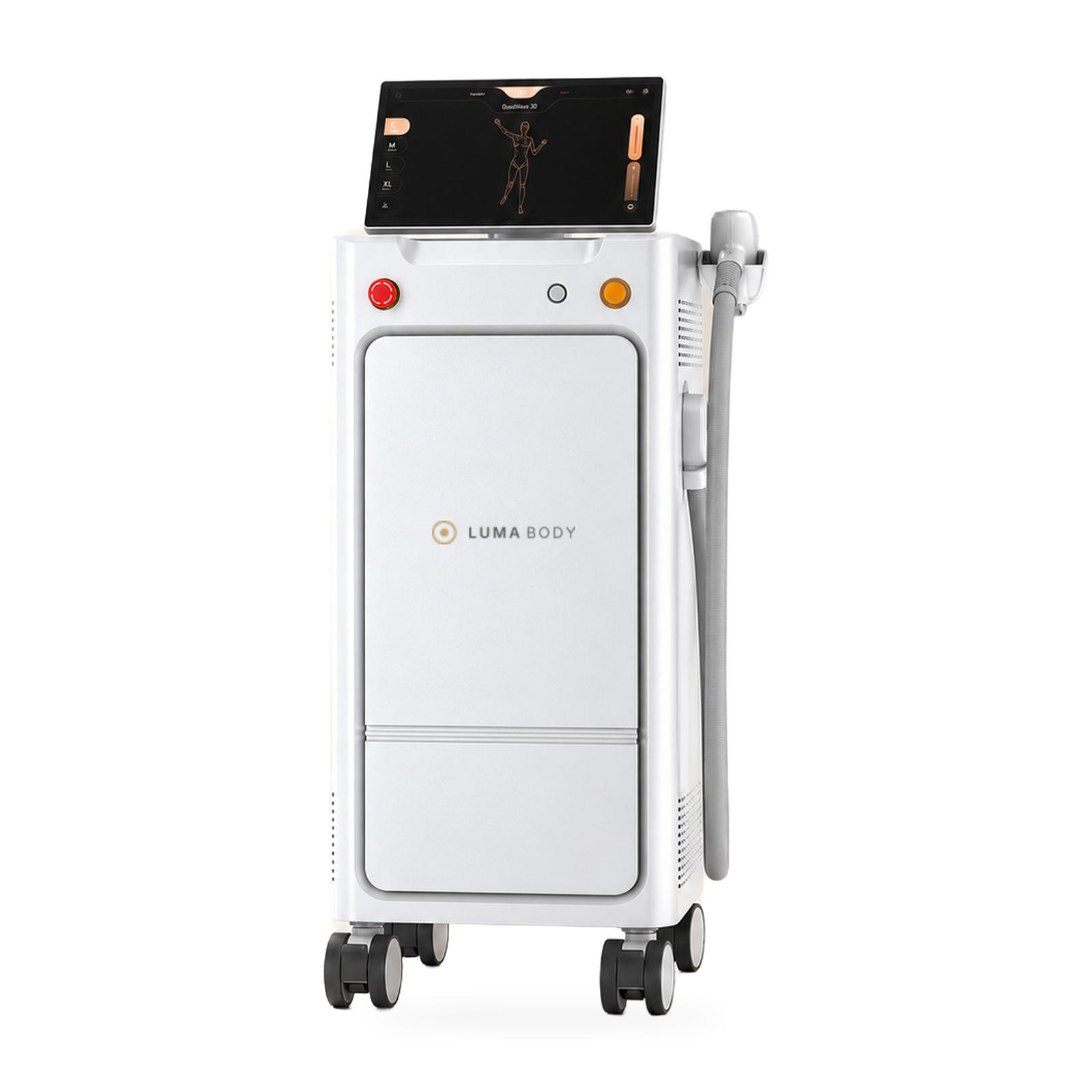
The LumaDiode QuadWave is $15,920, final delivered price. The page lists what you would otherwise have to ask for:
- Specification: four wavelengths (808, 755, 1064 and 940nm), 1800 W laser power, 10–125 ms pulse width, contact cooling at 5°C
- Power: 4000 W machine power, which matters when you check the circuit in your treatment room
- Options: a single-wavelength or four-wavelength build, a standard or clinic accessory package, with the effect of each option on price shown on the page
- Voltage: 110V 60Hz or 220V 50Hz, with no price difference
- Warranty: 12 months on the machine, 3 months on handpieces
- Training: online operator training for your team
Whether you need the fourth wavelength is a separate question, covered in 4 wavelength vs 3 wavelength diode lasers.
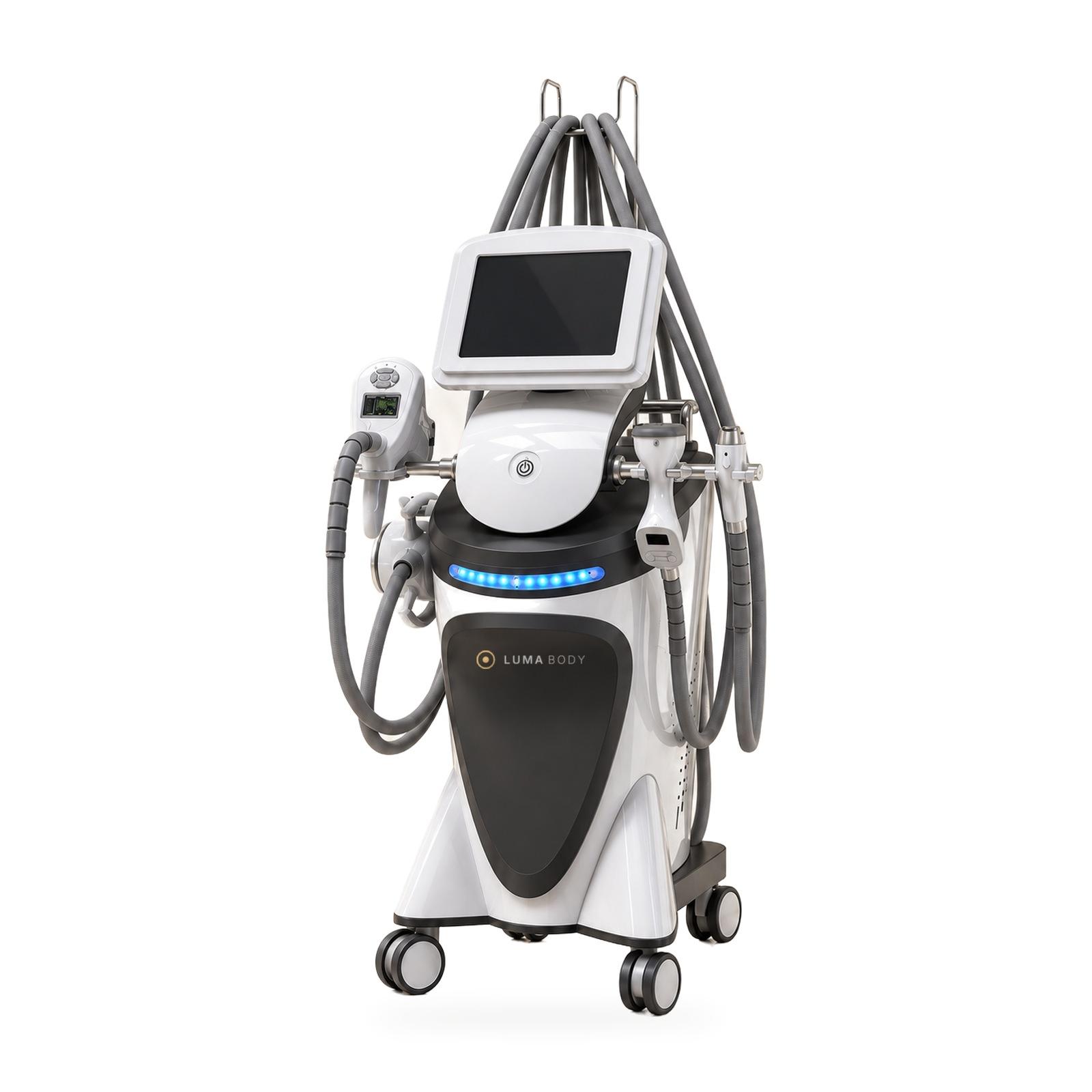
The LumaContour Pro is $7,920, final delivered price. It comes as a 6-in-1, or as a 4-in-1 at a lower price shown on the page. The listing gives:
- the four treatment head sizes, from 4x7mm to 40x60mm
- 750 VA rated input
- a footprint of 625 x 525 x 1070mm, worth measuring against your doorways and room before you order
- the same 12-month machine and 3-month handpiece warranty
For what vacuum RF does and does not do, read vacuum RF body contouring machines.
The point is not these two machines. It is the level of detail. If a seller cannot show you this much before you pay, that tells you something.
What is not a red flag
Some things make buyers nervous without good reason:
- An unbranded machine. It is a different device from a branded system and is priced differently. Judge it on its specification, paperwork, warranty and training, not on comparisons with a brand name.
- A seller who asks you questions. Questions about your room power, your client mix and who will operate the machine are a good sign. They mean the seller is trying to sell you the right configuration.
- Training delivered online. This works well if it is live, scheduled around your team and available again when staff change.
- A lower price. This is not a warning sign on its own. It is a reason to check carefully what the price includes.
If you are weighing a second-hand branded unit instead, the risks are different. See used or new: what a second-hand aesthetic laser really costs.
Before you sign
Keep one folder for each purchase. It should hold:
- the proforma invoice
- the written warranty
- a note of the phone call in which you confirmed the bank details
- the training schedule
- your photographs of the crate on arrival
If anything goes wrong, that folder is what turns a dispute into a straightforward claim.
For the full order sequence, from first enquiry to installation, read how buying a clinic machine direct works. To check the machine itself rather than the seller, use eleven things to check before buying any med-spa machine. If you are still deciding whether to pay outright, see leasing vs buying aesthetic equipment.